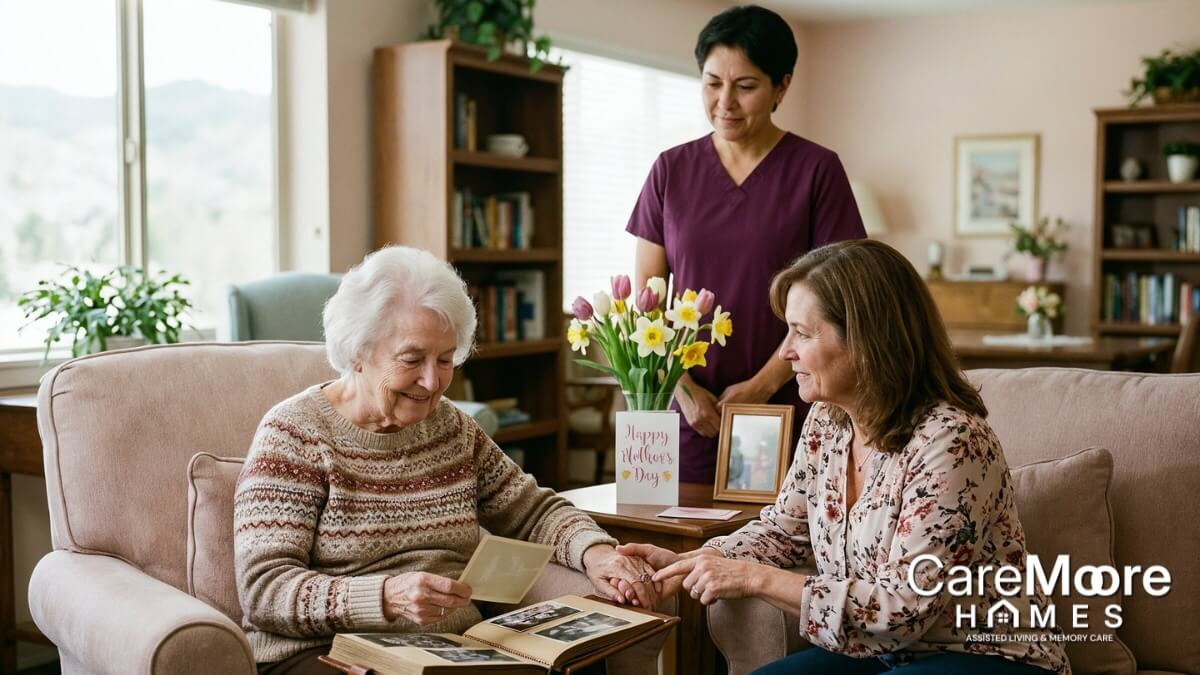

For many older adults and their families, the phrase “assisted living” comes with assumptions that feel difficult to accept. Images of large buildings, rigid schedules, rotating staff, and clinical routines often dominate the conversation. Yet the need for support does not mean the desire for comfort, familiarity, or independence disappears. In reality, those needs become even more important.
Aging in place has traditionally meant staying in one’s own home for as long as possible. But when daily tasks become harder to manage safely, aging in place does not have to end. Residential assisted living offers a reimagined approach, one that preserves the feeling of home while providing the care and structure seniors need to thrive.
When Aging in Place Begins to Change
The transition from independence to assisted living is rarely triggered by a single event. More often, it unfolds gradually through a series of small but meaningful changes. Medications are forgotten or taken incorrectly. Cooking becomes inconsistent. The home feels harder to maintain. Social engagement decreases, and isolation quietly grows.
Families often sense these shifts long before they feel urgent. There may be close calls rather than emergencies, moments of concern rather than clear danger. What holds many families back is not denial of need, but fear of what seeking care might take away. The concern is that support will come at the cost of identity, autonomy, and dignity.
True aging in place is not just about location. It is about continuity, comfort, and feeling secure in familiar surroundings. Residential assisted living bridges the gap by redefining what “home” can look like when care becomes necessary.
What Makes Residential Assisted Living Different
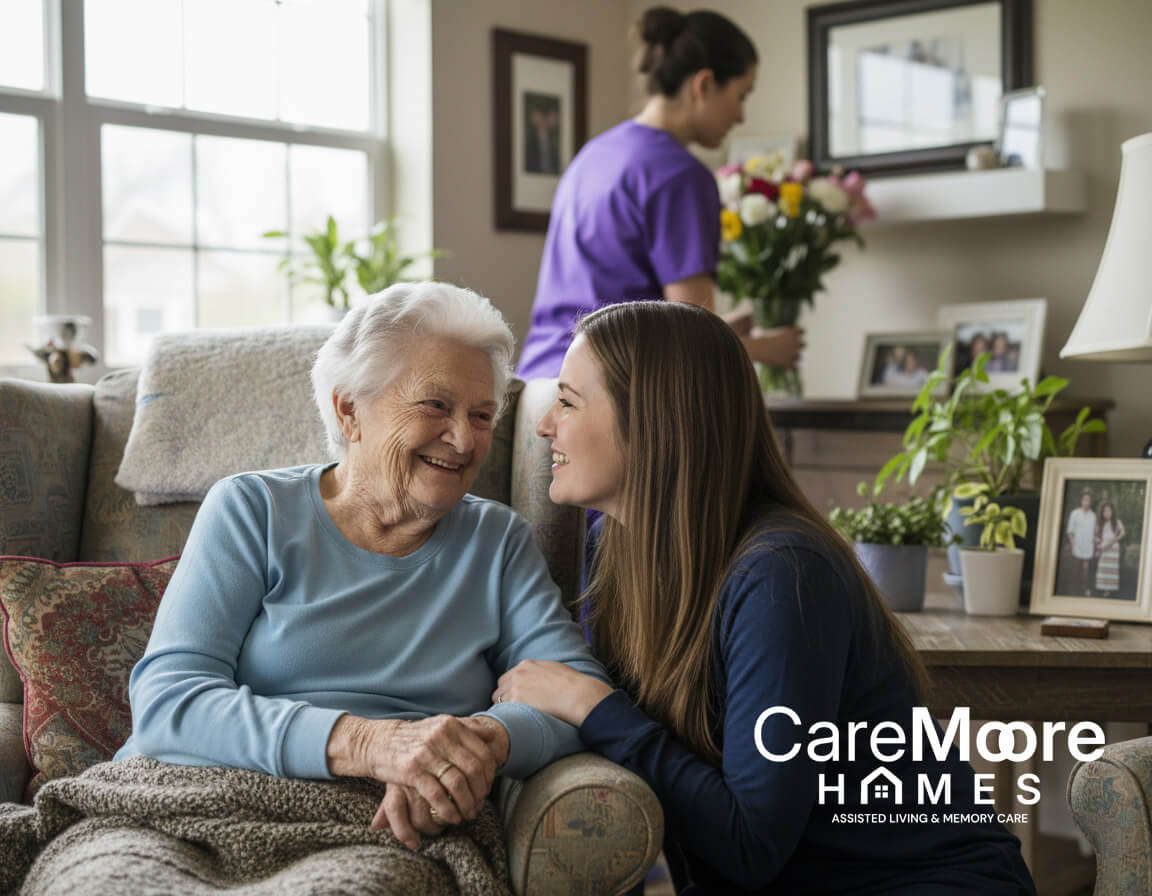
Residential assisted living is designed intentionally around scale and environment. Instead of large campuses or multi-story facilities, care is provided in small residential homes with a limited number of residents. This distinction fundamentally changes the daily experience.
With fewer residents, caregivers are able to build real relationships and understand individual preferences, routines, and personalities. Days are guided by natural rhythms rather than institutional schedules. Meals are shared at a dining table. Quiet moments are respected. Assistance is provided seamlessly, without drawing attention to the task itself.
Key elements that distinguish residential assisted living include:
- A true home environment rather than a clinical setting
- Higher caregiver-to-resident ratios that allow for attentive, individualized care
- Consistent staffing that builds trust and emotional security
- Flexible care plans that evolve as needs change
These details may seem subtle, but together they create an experience that feels supportive rather than restrictive.
Why Environment Plays a Critical Role in Well-Being
The physical and emotional environment has a direct impact on how seniors feel and function each day. Large, overstimulating spaces can increase anxiety, confusion, and withdrawal, particularly for individuals who are already vulnerable to stress or cognitive change. In contrast, smaller residential settings promote calm, orientation, and a sense of belonging.
When residents recognize their surroundings and the people caring for them, stress decreases. Sleep patterns improve. Appetite stabilizes. Engagement becomes more natural. These outcomes are not incidental. They are the result of an environment designed to prioritize quality of life rather than operational efficiency.
Residential assisted living supports emotional health alongside physical safety. Seniors are more likely to participate in daily activities, maintain social connections, and feel a sense of purpose when their environment feels personal instead of procedural.
Choosing Care Without Sacrificing Home
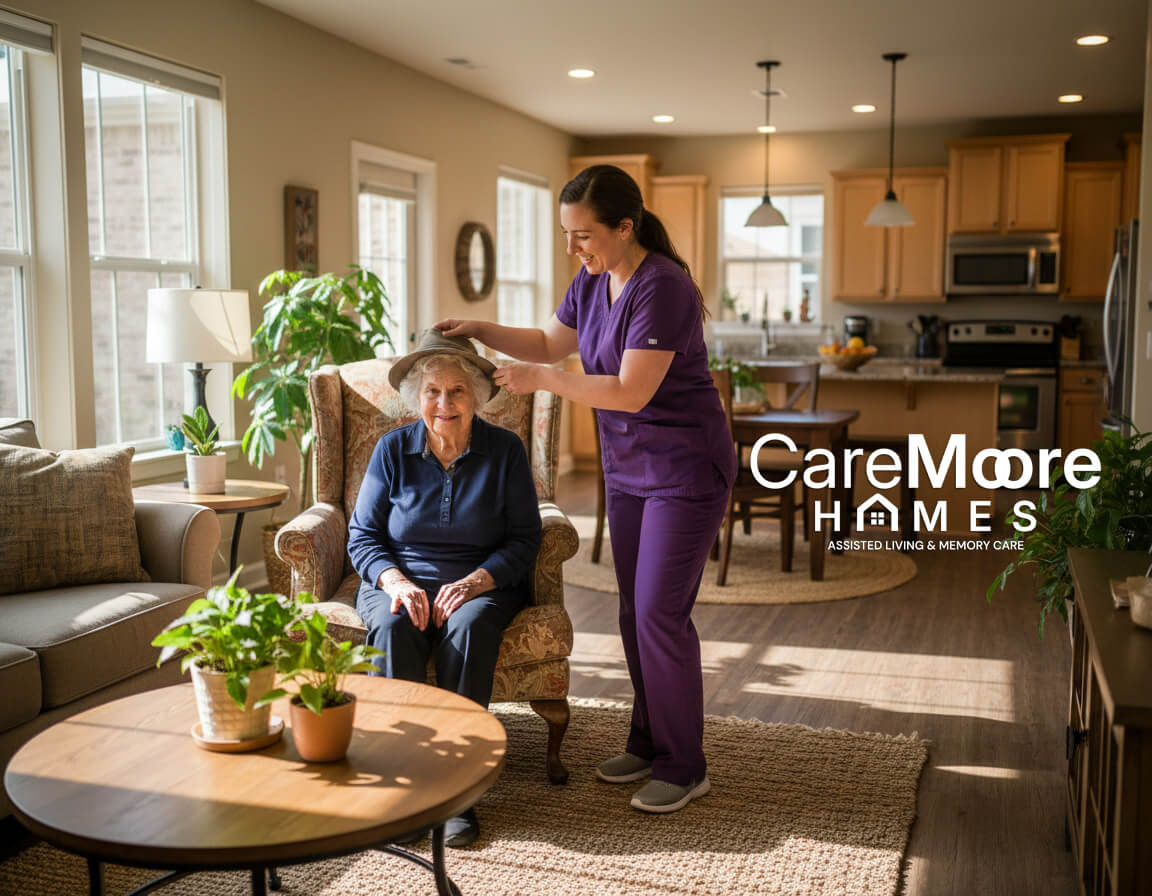
Selecting assisted living is not about giving something up. It is about choosing a setting that supports independence while addressing evolving needs. Residential assisted living allows seniors to continue aging in place, not by remaining alone, but by living in a home that is prepared to care for them fully.
For families, the difference becomes apparent quickly. Visits feel relaxed rather than rushed. Conversations focus on life rather than logistics. Confidence replaces constant worry. When care feels like home, everyone benefits.
Residential assisted living offers a path forward that honors where someone has been, supports where they are, and protects where they are going.