
Memory care rarely begins with a single decision. It unfolds gradually, often unnoticed at first. A missed appointment. Repeated questions. Confusion around medications or familiar routines. What begins as quiet concern slowly becomes constant vigilance.
Family members step in naturally. They organize schedules, monitor safety, and compensate for cognitive changes as best they can. At first, it feels manageable—temporary even. But as memory loss progresses, those small interventions accumulate into a full-time role that few families are equipped to sustain alone.
Memory care plays a critical role not only in protecting individuals living with cognitive decline, but in preventing caregiver burnout before it reaches a breaking point. When specialized support is introduced early, families preserve both safety and emotional connection.
The Invisible Weight of Memory Caregiving
Caregiver burnout in memory-related conditions develops differently than in other forms of care. It is not just physical fatigue—it is emotional exhaustion layered with grief, anxiety, and constant alertness.
Memory caregivers rarely get true rest. Sleep is disrupted by nighttime wandering or repeated reassurance. Workdays are interrupted by urgent calls. Personal health and social connections are quietly deprioritized. Over time, caregivers find themselves living in a state of ongoing crisis prevention.
Because memory loss is progressive, many families normalize the strain. They assume exhaustion is inevitable. Asking for help feels premature—or worse, like a betrayal. In reality, burnout is not a failure of commitment. It is the predictable result of managing a complex neurological condition without adequate support.
Left unaddressed, burnout increases the risk of missed medications, unsafe environments, emotional strain, and declining health for both the caregiver and the person living with memory loss.

When Cognitive Changes Become Safety Risks
As dementia and Alzheimer’s progress, safety concerns move to the forefront. Medications are forgotten or taken incorrectly. Familiar spaces become disorienting. Judgment and awareness decline. The risk of wandering, falls, or household hazards increases—even in well-loved homes.
Families often wait for a defining moment before seeking help. A fall. A frightening episode of confusion. A hospitalization that forces urgent decisions. By then, stress is high and options feel limited.
Memory care offers a different approach—one rooted in anticipation rather than reaction.
Memory Care as a Preventive Solution
Memory care is often misunderstood as a late-stage intervention. In reality, it is one of the most effective ways to prevent caregiver burnout while ensuring consistent, dignified support for individuals with cognitive decline.
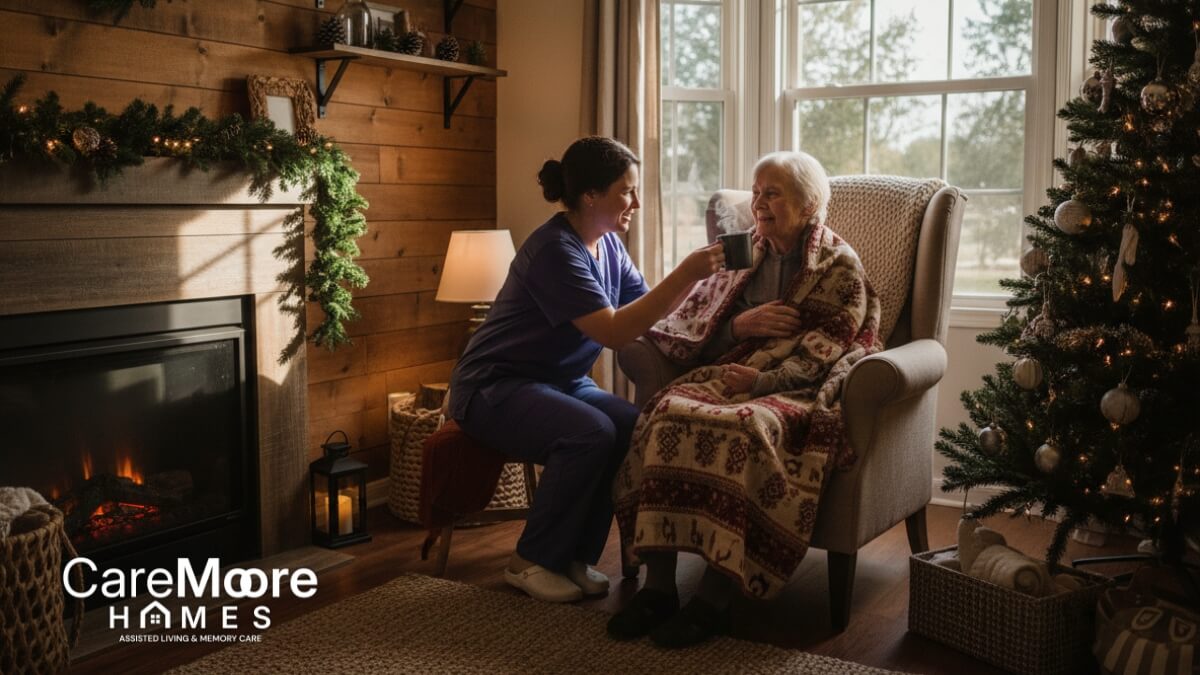
In a residential memory care setting, care is structured specifically for the needs of those living with memory loss. Trained caregivers provide daily supervision, medication oversight, personal care, and emotional reassurance within a secure, purpose-designed environment. Routines are predictable. Transitions are supported. Safety is embedded into every aspect of daily life.
This shared responsibility relieves families of constant monitoring while ensuring their loved one receives specialized care—every hour of every day. Memory care does not replace family involvement; it reinforces it by removing the strain that makes connection difficult.

Reclaiming the Family Relationship
When memory care responsibilities consume daily life, relationships shift. Conversations become task-oriented. Visits feel stressful or rushed. Emotional connection is overshadowed by concern.
Memory care restores balance. Families are able to spend time together without managing every detail. Visits become about presence rather than supervision. Loved ones are seen as parents, partners, or spouses again—not as responsibilities to manage.
This shift benefits everyone involved. Caregivers regain emotional energy and peace of mind. Residents experience consistent care, reduced anxiety, and a sense of belonging. Support does not distance families—it allows them to reconnect.

Care Designed for Sustainability
Care that relies solely on one exhausted individual is not sustainable—especially in the context of progressive memory loss. Memory care provides a structure that protects both residents and the family system surrounding them.
CareMoore Homes offers residential memory care across the Treasure Valley, providing consistent, relationship-centered support in thoughtfully designed home environments. Families have access to multiple locations, including Hobble Creek, Overland, Prickly Pear, Settlers, Stephen, and Taft, allowing them to choose a setting that feels right while remaining close to home.
Choosing memory care early is not giving up. It is an act of foresight, responsibility, and compassion—for the individual living with memory loss and for the family walking alongside them.
Memory care is not just about safety. It is about creating stability, preserving dignity, and building a foundation of support that allows families to endure—and thrive—together.