

Introduction
March is a natural time to refocus on your loved one’s brain health, especially if they’re living with Alzheimer’s or another form of dementia in a memory care community. With national observances like Brain Awareness Week and broader spring wellness initiatives, families can use this month to reset routines, refresh goals, and deepen connection.
At CareMoore Homes, our Boise and Meridian memory care homes are designed around person-centered routines, predictable structure, and meaningful engagement for residents at every stage of memory loss. This guide walks you through practical ways to support your loved one’s memory, mood, and dignity throughout March—whether you live nearby or out of state.
Why March Matters for Brain Health
Brain Awareness Week and spring reset
March often includes Brain Awareness Week and other neuroscience-focused campaigns, which encourage people to learn about brain health, aging, and cognitive changes. For families, this is a perfect cue to pause and ask: “How is Mom (or Dad) really doing right now?”
In a memory care setting, that might mean:
- Reviewing current care plans with the nurse or care team
- Asking how your loved one is engaging in cognitive and social activities
- Checking whether sleep, nutrition, and hydration are supporting brain function
Emotional significance of a new season
As Idaho moves into longer, lighter days, many residents experience shifts in energy, sleep, and mood. For someone with dementia, changes in sunlight and daily rhythm can either reduce or increase confusion. A memory care team that understands these seasonal shifts can adjust schedules gently, helping your loved one feel grounded and calm.
How Memory Care Supports Brain and Emotional Health Daily
Person-centered routines in a secure setting
In specialized memory care at CareMoore Homes, staff tailor routines to each resident’s history, personality, and current abilities, rather than forcing everyone into a single schedule. This often includes:
- Familiar wake-up times and mealtime patterns
- Cueing and gentle prompts rather than rushing or scolding
- Activities based on lifelong interests (gardening, music, crafts, or faith practices)
Because memory care units are secure yet homelike, residents have freedom to move around safely, reducing anxiety about wandering while supporting independence.
Structured cognitive and sensory activities
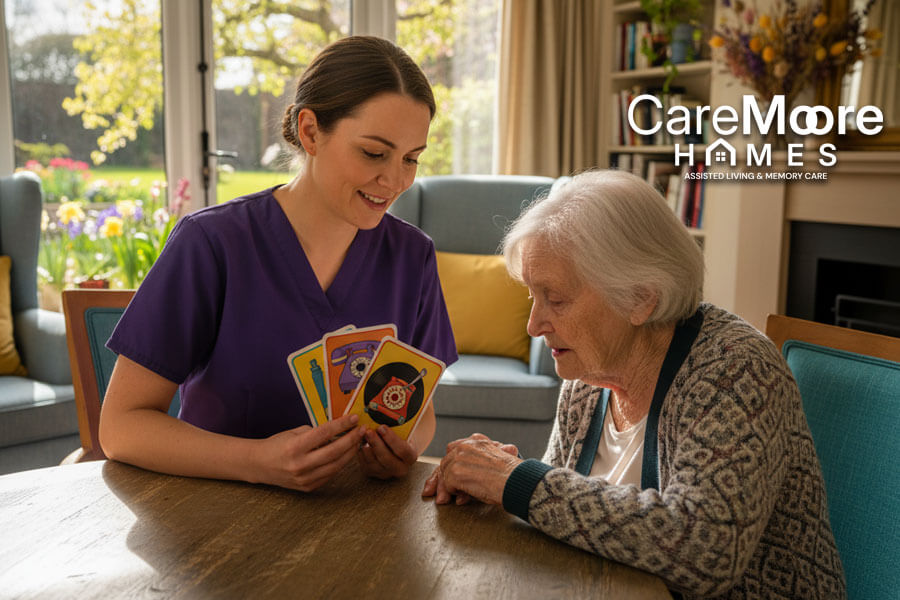
Evidence-informed memory care programs blend cognitive exercises with sensory and social engagement. In March, this might look like:
- Spring-themed art or flower arranging (color, scent, and touch stimulation)
- Simple word games, reminiscence talks, or picture prompts related to spring or past travels
- Gentle chair exercises or short walks that pair movement with conversation
The goal isn’t to “fix” memory, but to preserve function, support emotional well-being, and maintain a sense of purpose.
Practical Ways Families Can Support Memory Care in March
Questions to ask the care team this month
Here are some thoughtful questions to bring to your next visit or care conference:
- “How has my loved one’s mood and participation been over the last few weeks?”
- “Are there certain times of day when they seem more confused, restless, or sleepy?”
- “What activities are they responding to best right now?”
- “Is there anything we can provide—photos, stories, music—that would help personalize their care?”
These questions signal that you’re a collaborative partner and open the door to small adjustments that can make a big difference.
Personalizing March visits
When you visit in March, think about engaging more than just conversation. Consider bringing:
- A small photo album with spring memories (Easter, gardening, family trips)
- A favorite light sweater or blanket in cheerful colors
- A simple bouquet or potted plant that staff can help care for with your loved one
When attention is limited, brief, warm interaction is often more effective than long, complex visits. Focus on the feeling you leave them with—calm, loved, safe—rather than on what they can remember later.

Supporting Healthy Routines Linked to March Health Themes
Nutrition, hydration, and National Nutrition Month
March is National Nutrition Month, which is a helpful reminder that nourishing meals and hydration play an important role in brain health, especially for older adults. Ask your memory care team:
- How are fluids encouraged throughout the day?
- Are there favorite foods your loved one seems to eat better than others?
- Are texture modifications needed to keep eating safe and enjoyable?
You can read more general guidance about senior nutrition from reputable sources like the National Council on Aging or the Academy of Nutrition and Dietetics.
Sleep, safety, and reducing confusion
National Sleep Awareness Week in March highlights how vital sleep is for thinking clearly, managing behavior, and maintaining mood. In dementia, poor sleep can increase confusion and agitation. Memory care teams support better sleep by:
- Keeping consistent daytime routines and avoiding excess daytime napping
- Limiting stimulating activities in the evening
- Using low, soothing lighting and quiet environments at night
If you’re noticing changes in your loved one’s sleep or sundowning behavior, ask how the community is addressing it and whether adjustments in routine, lighting, or medical review are recommended.
Coping with Guilt and “Second Guessing” in March
Seasonal reflections can trigger doubt
A new month or new season can reopen questions like, “Did we move Mom too early?” or “Should we be doing more?” These feelings are common among adult children, particularly when they’re seeing spring activities and family gatherings on social media.
Recognizing that memory care is often the safest and most supportive environment for moderate to advanced dementia can bring some peace. The structure, trained staff, and 24/7 supervision are things family members simply can’t replicate at home indefinitely.
Reframing your role as “care partner”
Instead of being the primary hands-on caregiver, you’re now a care partner: the person who knows your loved one’s history best and advocates for what matters most to them. Your role includes:
Sharing stories, traditions, and preferences with staff
Visiting in ways that fill your loved one’s emotional “cup”
Watching trends over months, not days, and speaking up when something feels off
This partnership between family and the care team is at the heart of high-quality memory care.

How CareMoore Homes Supports Families All Year, Not Just in March
Boise and Meridian locations rooted in community
CareMoore Homes serves families in Boise and Meridian, providing assisted living and specialized memory care within residential-style settings. Being connected to local senior centers, health awareness events, and Idaho aging resources helps residents and families feel part of a broader community.
This community grounding matters when you’re looking for a place that feels not just safe, but familiar and human.
Ongoing communication and transparent support
Families need regular, honest updates to feel confident in their loved one’s care. At a strong memory care community, you should expect:
- Clear points of contact for questions or concerns
- Proactive communication about changes in health or behavior
- Encouragement to attend care planning meetings and special events
If you’re not currently receiving that level of communication, it’s absolutely appropriate to ask for it.
March is a powerful moment to reassess how your loved one is doing, refresh routines, and reconnect with the care team supporting them day in and day out. With thoughtful memory care, seasonal changes can be an opportunity for comfort and connection instead of confusion or crisis. You don’t have to navigate this alone.
If you’re exploring memory care—or if your loved one is already in a community and you’d like a second set of eyes—
CareMoore Homes in Boise and Meridian is here to help. You can learn more about our memory care services at:
- Website: https://caremoorehomes.com/services/memory-care/
- Call or text: (Use your primary community phone, for example 208-314-2046 as listed publicly for Hobble Creek)
- Google Business Profile: Search “CareMoore Homes Boise” or “CareMoore Homes Meridian” on Google to view reviews, photos, and directions.
You’re welcome to schedule a tour, ask specific questions about your family’s situation, or simply start a conversation about what you’re noticing this March.