
Introduction – When Mother’s Day Starts to Feel Different
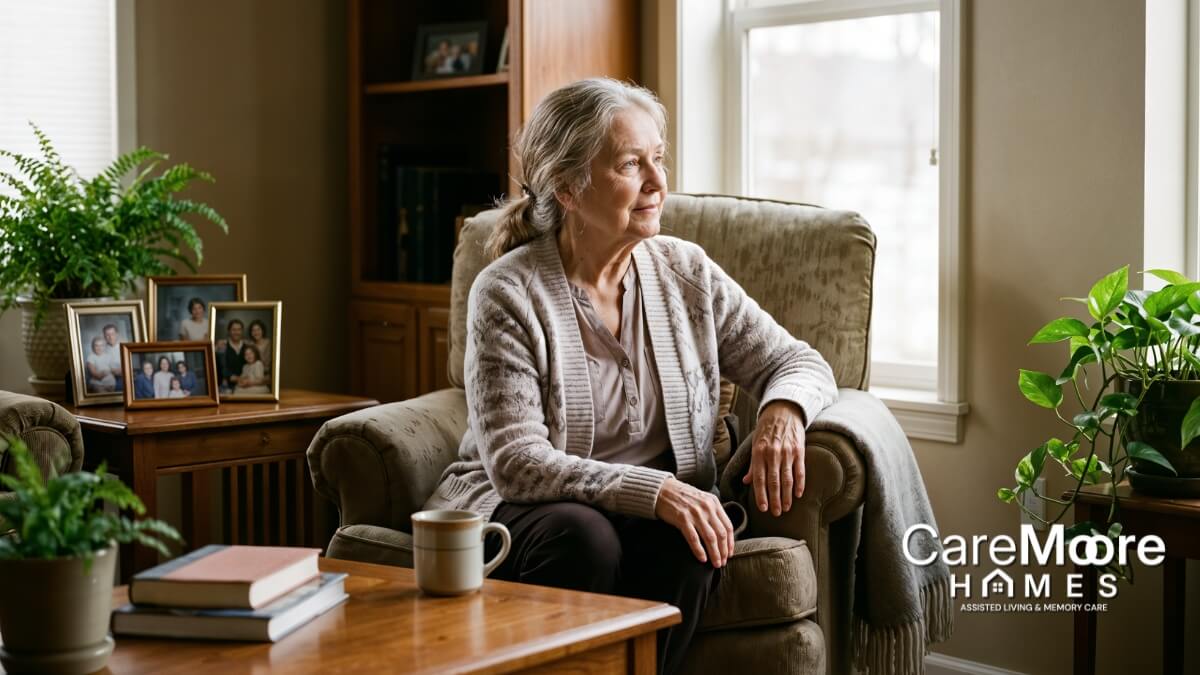
Mother’s Day in May can be bittersweet when your mom is living with dementia. You may be grieving the conversations you used to have, the recipes she used to remember by heart, or the way she never forgot a birthday. Now, she may forget names, repeat questions, or seem lost in her own home.
In Idaho—and across the country—families are quietly facing the same reality. Many are unsure when to move from “helping Mom at home” to “Mom needs memory care.” At CareMoore Homes, serving Boise, Meridian, and the surrounding Treasure Valley, memory care is designed to honor your mom’s story while keeping her safe and supported as her needs change.
This blog will help you understand how to honor your mom’s dignity, especially around Mother’s Day, and how a memory care community can actually deepen—not weaken—your relationship with her.
Understanding Dementia Through a Compassionate Lens
It’s Not “Just Getting Older”
Forgetting where you put your keys or needing reading glasses is part of normal aging. Dementia is different. It affects memory, judgment, language, behavior, and the ability to manage everyday life. Alzheimer’s disease is the most common cause of dementia in older adults.
If your mom is:
- Repeating the same stories or questions within minutes
- Getting lost in familiar places, even at home
- Mixing up medications or forgetting to take them
- Struggling to follow steps in simple tasks (cooking, paying bills)
she may be experiencing more than “senior moments.”
Why Women Are Often More Affected
Women are more likely than men to develop Alzheimer’s disease, partly because they tend to live longer and may have different risk profiles. Women’s Health Month, observed in May, is a reminder to take women’s brain and mental health seriously—not just their physical health. If your mom is showing signs of cognitive decline, addressing it early gives you more options and time to plan.

When Caring for Mom at Home Becomes Too Much
The Invisible Load Adult Daughters Often Carry
Many daughters (and daughters-in-law) naturally step in as the primary caregiver. You might be managing your own household, a job, kids, and your mom’s medications, appointments, meals, and safety—all at once. Over time, this invisible load becomes unsustainable.
You might notice:
- Constant worry about whether Mom is safe alone
- Late-night phone calls or emergencies
- Strain in your marriage or with your children
- Feeling guilty no matter what you do
These are not signs that you’re failing. They’re signals that the situation has changed, and it may be time to consider additional support like memory care.
Recognizing When Safety and Supervision Are No Longer Optional
There is no perfect day when everyone “feels ready” for memory care. Instead, families often look back and say, “We waited longer than we should have.” Consider the following:
- Has your mom wandered or attempted to leave the house at odd hours?
- Has she had more than one fall or hospital visit recently?
- Is she mixing up medications or refusing them?
- Are you afraid to leave her alone, even for short periods?
If you answered yes to several of these, a secure memory care environment may help prevent crises while improving quality of life for both of you.
What a Loving Mother’s Day Can Look Like in Memory Care
Creating New Traditions That Work for Her Abilities
If your mom lives in a memory care community, Mother’s Day can still be special—it just might look a little different. Instead of a full day of outings that leave her confused or exhausted, you might:
- Share a simple brunch at the community
- Bring her favorite flowers, lotion, or soft blanket
- Look through old family photos together
- Play her favorite music from when she was younger
The goal is not to recreate the past perfectly, but to create moments of connection in the present.
How CareMoore Homes Supports Special Days
In smaller, residential-style communities like CareMoore Homes in Boise and Meridian, teams can tailor Mother’s Day activities to the needs of residents. This may include:
- Small-group celebrations rather than large, overwhelming parties
- Gentle sensory activities (flowers, music, baking)
- Staff support so you can focus on being a daughter, not the event coordinator
Your visit becomes less about logistics and more about being fully present with your mom.

Inside a Home-Like Memory Care Community in the Treasure Valley
Smaller Settings, Bigger Sense of Family
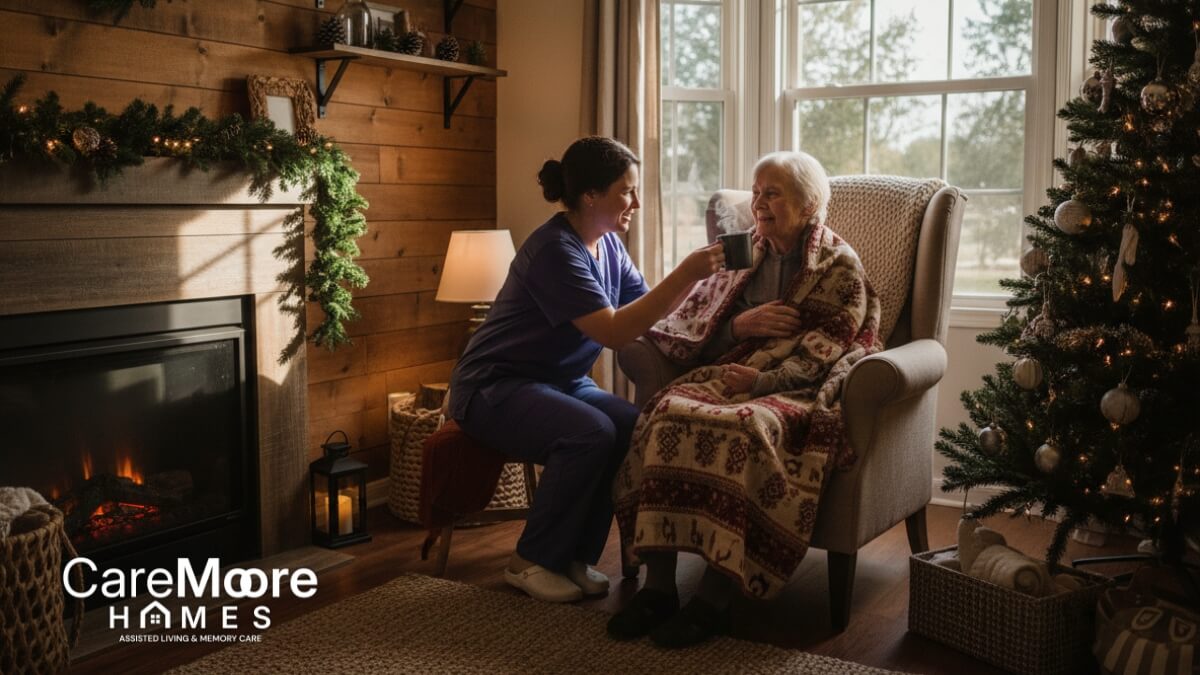
CareMoore Homes offers memory care in intimate, home-like settings in the Boise area, which can be less intimidating and easier to navigate than large, institutional buildings. Residents benefit from:
- A consistent care team that gets to know each person’s history and preferences
- Cozy common areas instead of long hallways and crowds
- Personalized routines that respect each resident’s pace and comfort
Families often say their loved one feels more like they’re living in a home than in a facility.
Personalizing Care Around Your Mom’s Story
One of the strengths of memory care at a community like CareMoore Homes is the ability to personalize care. Team members can learn about:
- Your mom’s career, hobbies, and favorite roles (teacher, nurse, homemaker)
- Her favorite foods, music, or spiritual practices
- Her daily rhythms—early riser or night owl, social or quiet
This information shapes how staff approach her, talk with her, and plan her day. That kind of personalization honors who she is, not just the diagnosis she carries.
Planning Ahead: Financial and Emotional Considerations
Talking About the Transition With Siblings and Family
Families rarely agree on everything, especially around care decisions. To navigate this season:
- Share specific examples of safety concerns or burnout, not just feelings
- Consider a family meeting with a neutral third party (social worker, doctor)
- Focus on what’s best for your mom’s quality of life, not on past family dynamics
If you’re local to Boise or Meridian, visiting CareMoore Homes together can help everyone see what memory care truly looks like, rather than imagining the worst.
Navigating Cost and Expectations
Memory care is more specialized (and often more expensive) than traditional assisted living because of the higher level of support and safety needed. Costs vary based on location, room type, and care needs. Some families explore:
- Private funds or savings
- Long-term care insurance
- Selling a home or assets
- Veterans’ benefits (when applicable)
Communities like CareMoore Homes at Hobble Creek often provide clarity on what is included in the monthly rate and what additional services may cost. The more transparent the conversation, the easier it is to plan.

Giving Yourself Permission to Be “Just” a Daughter Again
Letting Go of Guilt, Holding Onto Love
It’s common to feel guilt when considering memory care, especially around sentimental days like Mother’s Day. But choosing a safe, supportive community can allow you to:
- Visit as a daughter instead of a stressed caregiver
- Share laughter and memories instead of constant worry
- Show love through presence, not just physical tasks
You are not abandoning your mom; you are surrounding her with a team of people who can help meet needs that have become too heavy to carry alone.
Ready to Explore Memory Care for Your Mom?
Gentle Call to Action for Idaho Families
If you’re in Boise, Meridian, Eagle, or the surrounding Treasure Valley and you’re wondering whether memory care might be the next loving step for your mom, you’re invited to reach out.
You can:
- Learn more about CareMoore’s approach to assisted living and memory care: CareMoore Homes Website
- Call to discuss your mom’s specific situation and arrange a tour: (I don’t know).
- Search “CareMoore Homes Memory Care Boise” or “CareMoore Homes at Hobble Creek” on Google to view the Google Business Profile, photos, and reviews.
This Mother’s Day, honoring your mom might mean giving her the gift of safety, structure, and a community that sees her as more than her memory loss.