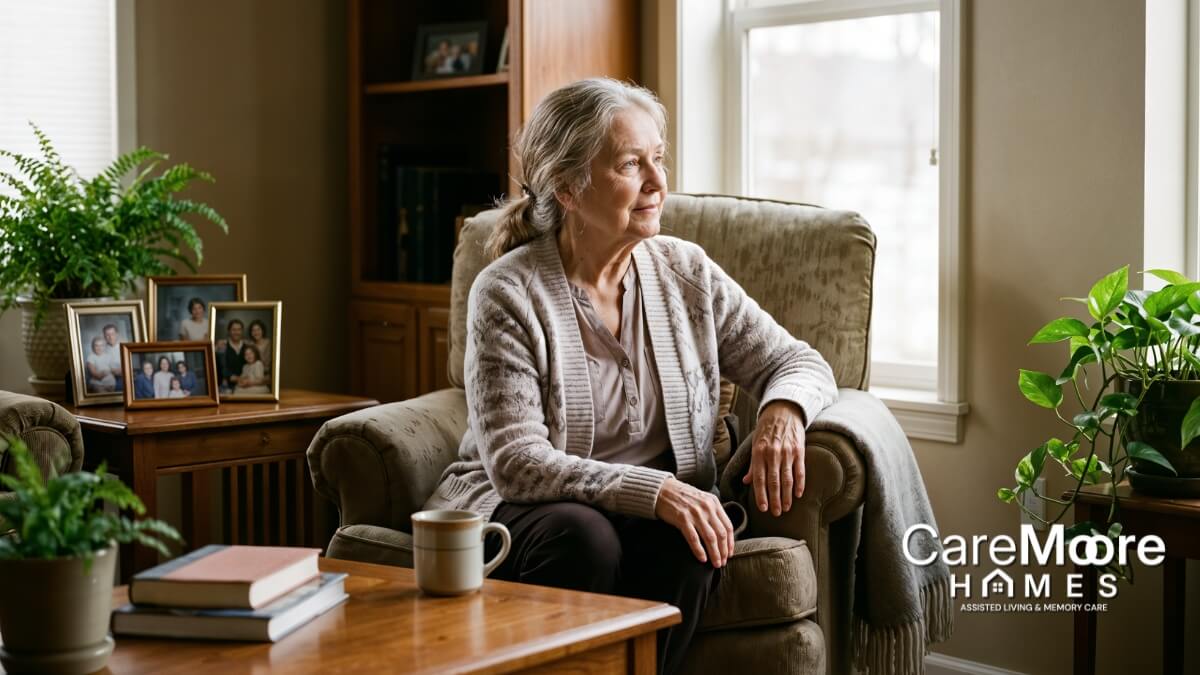

You’ve probably caught yourself thinking it more than once this summer: “How do I keep Mom safe without taking away everything that makes her her?”
It’s a question that doesn’t have a clean answer. You notice more confusion when the routine shifts, more close calls in the kitchen, more anxiety when summer visitors come and go. But you also see flashes of who she’s always been: capable, proud, independent. The idea of “memory care” can feel like erasing that.
Here’s what most families don’t realize until they see it firsthand: memory care, done right, isn’t about removing independence. It’s about building the right scaffolding around your loved one so they can safely keep as much independence, purpose, and dignity as their condition allows.
At CareMoore Homes in Boise and Meridian, Idaho, we treat memory care as a partnership with families to protect both safety and identity. This guide will help you evaluate whether this summer is the right time, and what a balanced approach actually looks like in practice.
What Is Memory Care, Really? (And What Isn’t It?)
Memory care is specialized residential support designed for people with Alzheimer’s or other dementias. It is not a locked ward where residents lose their identity. In modern, home-like settings, the goal is to maximize what your parent can still do, not take over everything.
How Is Memory Care Different from Assisted Living?
Both provide help with meals, hygiene, medications, and daily tasks. Memory care adds a layer of specialization:
- Higher staff-to-resident ratios (often 1:5 or 1:6 vs. 1:10+ in assisted living)
- Staff with advanced dementia communication and behavior training
- Secured, easy-to-navigate environments that reduce wandering risk
- Structured daily programming designed around cognitive needs
- Mood and behavior support tailored to dementia progression
According to the Alzheimer’s Association, approximately 60-70% of people with dementia eventually need the level of supervision that memory care provides. If your parent is beginning to need more than “just a little help,” memory care may be better suited than traditional assisted living.
Does Moving to Memory Care Mean Losing Independence?
No. Quality memory care operates on a “do with, not do for” philosophy. That means staff are trained to:
- Guide your parent through dressing rather than doing it entirely for them
- Offer meaningful choices (between outfits, snacks, activities)
- Encourage participation in simple tasks like folding towels or helping set a table
- Support safe mobility rather than defaulting to a wheelchair
Research published in The Gerontologist has shown that maintaining even small daily choices and routines can slow functional decline and improve quality of life for people with dementia. These aren’t small things; they’re the architecture of dignity.
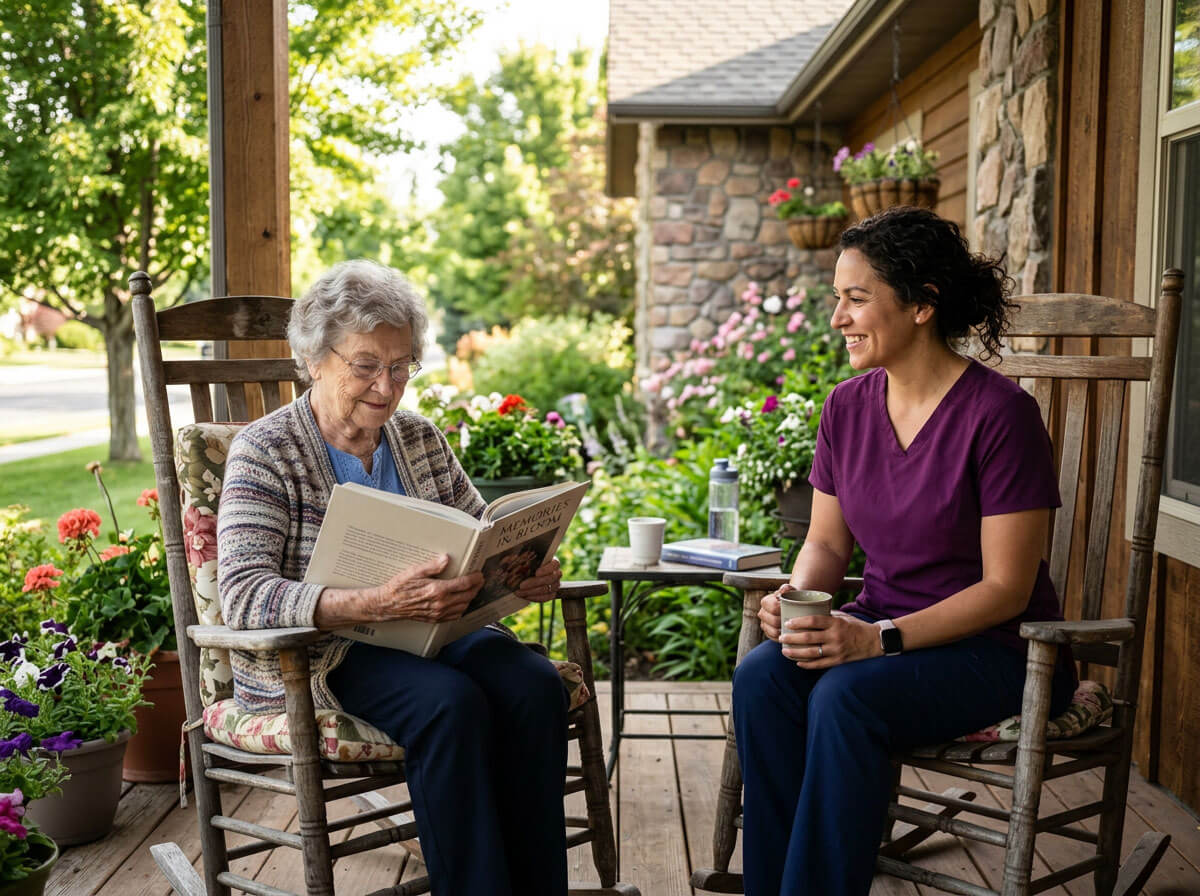
What Summer Warning Signs Suggest It’s Time for Memory Care?
If this summer has brought a noticeable increase in confusion, safety incidents, or caregiver stress, those aren’t seasonal blips. They’re often the tipping point that families later say they wish they’d acted on sooner.
Is Increased Summer Confusion a Sign of Decline?
Summer is uniquely disorienting for people with dementia. Extended daylight confuses time-of-day perception, holiday gatherings break predictable routines, and adult children traveling for vacation removes familiar anchors. Common patterns families report in July include:
- Confusion about whether it’s morning or evening when sunlight lingers past 9 PM
- Heightened anxiety when routines shift for family visits or holidays
- Difficulty navigating familiar spaces in different summer lighting
- Agitation that worsens as the day gets longer (sundowning)
If reassurance and redirection no longer work like they used to, the cognitive demands of summer may be exceeding what home care can manage.
What Safety Red Flags Should I Stop Ignoring?
Be honest with yourself about these questions:
- Are you afraid to leave your parent alone, even for 30 minutes?
- Have there been close calls with the stove, oven, water faucets, or exterior doors?
- Have neighbors or police been involved in a wandering situation?
- Are falls becoming more frequent, especially in the bathroom, kitchen, or yard?
- Is your parent leaving the house at unusual hours without clear purpose?
The National Institute on Aging notes that wandering affects up to 60% of people with Alzheimer’s at some point during the disease. If you’re relying on constant, unsustainable supervision to keep your parent safe at home, that’s not a plan; it’s a countdown.
Is Caregiver Burnout a Valid Reason to Choose Memory Care?
Yes, fully. The National Alliance for Caregiving reports that 40% of dementia caregivers experience clinical depression, and caregivers who are burned out provide measurably lower quality care, even with the best intentions.
Ask yourself:
- Are you missing work or important family events to provide care?
- Are you sleeping poorly or feeling constantly on edge?
- Have relationships with your children, spouse, or friends deteriorated?
- Do you feel like you’re always one crisis away from breaking down?
Choosing memory care because you’re burned out isn’t selfish. It’s recognizing that your parent deserves consistent, rested, trained support, and you deserve to be their child again, not their full-time nurse.
How Does Memory Care Protect Safety While Preserving Independence?
The best memory care environments are designed so that safety is built into the infrastructure, freeing residents to move, choose, and engage without constant restriction.
What Environmental Features Support Independence?
A well-designed memory care home removes “hidden hazards” so residents can navigate more confidently on their own:
- Clear visual cues and labels for bathrooms, bedrooms, and common areas
- Consistent furniture placement that supports spatial memory
- Secured outdoor spaces where residents walk freely without wandering risk
- Non-slip flooring and grab bars in wet areas
- Calm, well-lit dining spaces designed for focused, unhurried meals
- Climate-controlled environments that eliminate summer heat risk
At CareMoore Homes, the residential-style layout means your parent isn’t navigating long institutional hallways. They’re moving through a home, one that happens to be built with their cognitive needs in mind.

How Do Care Plans Honor Who My Parent Has Always Been?
Independence doesn’t look the same for everyone. A retired teacher expresses it differently than a lifelong farmer or a devoted homemaker. Personalized care plans at CareMoore Homes account for:
- Past professions, hobbies, and interests
- Cultural and spiritual background
- Typical daily routines from before memory loss began
- Food preferences and sensitivities
- Preferred wake, rest, and social times
This means staff can support independence in ways that feel familiar and meaningful, not generic. Your parent isn’t just “a resident.” They’re a person with a story, and good memory care keeps that story central.
What Does Memory Care at CareMoore Homes Look Like Day-to-Day?
CareMoore Homes operates small, residential memory care homes in Boise and Meridian, Idaho (including communities on Stephen Avenue and at Hobble Creek). Residents live in home-like environments with shared living spaces, private or semi-private bedrooms, cozy outdoor areas, and consistent staff they recognize and trust.
How Does CareMoore Homes Handle July Specifically?
Summer brings specific risks that the team actively manages:
- Hydration: Regular offering of water, herbal teas, and hydrating snacks throughout the day, with intake monitored
- Heat safety: Limiting outdoor time to cooler hours, ensuring shade and appropriate clothing
- Noise and stimulation: Minimizing exposure to fireworks while honoring the season with adapted, low-stimulation celebrations
- Routine consistency: Keeping mealtimes, activities, and bedtimes predictable even when families are traveling or schedules shift
These aren’t afterthoughts. They’re baked into the July care plan because the team has seen what unmanaged summer stress does to residents with dementia.
Will I Know How My Parent Is Doing?
You won’t be left guessing. Communication at CareMoore Homes includes:
- Regular updates about health, mood, and engagement levels
- Prompt communication about any changes in condition
- Collaboration on care decisions and goal-setting
- Invitations to participate in care planning and community events
You remain an essential part of your parent’s life. Memory care changes where they live, not who loves them.
Frequently Asked Questions
When is the right time to move a parent to memory care?
- There’s rarely one dramatic moment. It’s usually a pattern: escalating safety concerns, caregiver exhaustion, and a sense that the current situation is no longer sustainable. If you’re asking the question seriously, that’s often the answer.
Will my parent adjust to memory care, or will the move make things worse?
- Most residents experience an adjustment period of 2-4 weeks. After that, the consistency of routine, trained staff, and purpose-built environment typically reduces anxiety and behavioral symptoms compared to a chaotic home situation. Smaller, home-like settings (like CareMoore Homes) tend to ease transitions faster than large facilities.
What’s the difference between memory care and a nursing home?
- Nursing homes (skilled nursing facilities) provide medical care for complex health needs. Memory care is specialized assisted living focused on cognitive support, safety, and quality of life for people with dementia. Some residents eventually need skilled nursing, but many thrive in memory care for years.
How much does memory care cost in Boise, Idaho?
- Memory care in the Boise-Meridian area typically ranges based on level of care needed. CareMoore Homes offers personalized pricing after an individual assessment. Call 208-338-7878 (Stephen Ave) or 208-314-2046 (Hobble Creek) for a conversation about your specific situation.
Can my parent still go outside and have freedom of movement?
- Yes. CareMoore Homes provides secured outdoor spaces where residents can enjoy fresh air, sunshine, and light activity safely. The environment is designed to allow movement, not restrict it.
How do I talk to my parent about memory care?
- Focus on safety and comfort rather than “you can’t do this anymore.” Many families find it helpful to frame the conversation around “getting more help” rather than “moving to a facility.” The CareMoore Homes team can help you navigate this conversation.
Ready to talk?
Deciding whether memory care is the right step isn’t something you figure out in a single moment. It’s the result of many days and nights of loving concern, careful observation, and honest reflection. You don’t have to figure it out alone.
📞 Call: 208-338-7878 (Stephen Ave) or 208-314-2046 (Hobble Creek)
🌐 Visit: CareMoore Homes – Assisted Living & Memory Care
📍 Find us: Search “CareMoore Homes Boise” on Google to read reviews from other Idaho families.
You’re not taking independence away. You may be giving your loved one the support they need to safely enjoy the independence they still have.