
January brings a natural moment of reflection and renewal—a time when many of us think about our own health goals and personal growth. But if you have a loved one living with memory loss, the start of a new year also presents a meaningful opportunity to reassess their wellness needs, establish supportive routines, and set intentions for their care throughout 2026.
At CareMoore Homes, we believe that goal-setting in memory care looks different than it might for younger, more independent adults. It’s not about aggressive fitness targets or rigid resolutions. Instead, it’s about creating a thoughtful, compassionate roadmap that prioritizes comfort, dignity, quality of life, and the unique needs of a person living with Alzheimer’s or other forms of dementia.
This guide will help you navigate the goal-setting process and work collaboratively with our care team to ensure your loved one thrives in 2026.
Why Goal-Setting Matters in Memory Care
When someone receives a diagnosis of dementia or Alzheimer’s disease, families often struggle with a difficult emotional transition. Many caregivers ask: What are we working toward? or What does success look like now?
The truth is, health and wellness goals in memory care shift from curing illness to supporting independence, reducing discomfort, and maximizing quality of life. Goal-setting becomes less about clinical outcomes and more about daily experiences—meaningful moments, emotional connection, physical comfort, and dignity.
Research on aging and cognitive health shows that residents in memory care communities with structured wellness plans and clear care goals experience:
- Better emotional wellbeing – When routines are predictable and personalized, residents feel safer and less anxious
- Improved physical health – Consistent monitoring, nutrition, and gentle exercise support better overall health outcomes
- Stronger family relationships – Clear goals and regular communication deepen trust between families and caregivers
- Enhanced quality of life – When care is intentional, residents enjoy more engagement, activity, and moments of joy
Setting wellness goals at the start of the year gives families and caregivers a shared vision and creates accountability for supporting it together.

Key Wellness Goals to Consider for Your Loved One
Every person’s care is different, but these five wellness categories can serve as a helpful framework for goal-setting in memory care:
1. Physical Health and Mobility
Why it matters: Staying physically active helps maintain strength, independence, balance, and overall confidence. For seniors living with memory loss, gentle movement also supports better sleep, digestion, and mood.
Possible goals:
- Maintain or improve balance to reduce fall risk
- Stay consistently hydrated throughout each day
- Participate in gentle exercise or movement activities 3-4 times weekly
- Walk indoors for 10-15 minutes each day
- Maintain stable weight through balanced nutrition
- Complete physical therapy or mobility exercises if recommended
How CareMoore supports it: Our team designs personalized activity plans that include guided stretching, chair-based exercises, indoor walking routes, and gentle movement sessions tailored to each resident’s abilities. Our nurses monitor hydration and nutritional intake daily, and our dining programs emphasize brain-healthy, satisfying meals.
2. Cognitive Engagement and Mental Stimulation
Why it matters: The brain thrives on gentle challenge and meaningful activity. Even as memory changes, residents benefit from stimulating, enjoyable activities that provide purpose and engagement—without frustration.
Possible goals:
- Participate in memory-friendly activities (puzzles, games, music, art) 4-5 times weekly
- Engage in conversation and social interaction daily
- Take part in reminiscence activities (looking at photos, storytelling)
- Try new sensory experiences (music, aromatherapy, gardening)
- Attend community events and group activities
How CareMoore supports it: Our activity directors design a varied program including music therapy, craft activities, games, baking, movie afternoons, and seasonal celebrations. We personalize activities based on each resident’s interests and abilities, ensuring engagement feels joyful rather than overwhelming.
3. Emotional Health and Connection
Why it matters: Memory loss can bring anxiety, confusion, and sadness. Emotional wellbeing is as critical as physical health. Meaningful connections with caregivers, family members, and friends provide comfort and purpose.
Possible goals:
- Reduce anxiety or restlessness through calming routines
- Maintain meaningful contact with family members (weekly visits or calls)
- Build friendships with other residents
- Participate in spiritual or faith-based activities if meaningful
- Experience moments of joy and laughter regularly
How CareMoore supports it: Our caregivers receive specialized training in memory care communication and emotional support. We encourage family visits and connection, provide comfortable common spaces for socializing, and create a warm, family-like community atmosphere. Our team notices what brings each resident comfort—whether that’s music, a familiar person, a beloved activity—and weaves those moments throughout the day.
4. Sleep and Restorative Rest
Why it matters: Quality sleep affects mood, cognition, immune health, and overall wellbeing. Disrupted sleep is common in dementia, but structured routines and a calm environment can improve rest significantly.
Possible goals:
- Establish a consistent sleep schedule (going to bed and waking at similar times)
- Reduce nighttime restlessness or confusion
- Create a calming bedtime routine
- Minimize sleep disruption from sundowning (late-afternoon confusion)
How CareMoore supports it: Our homes are designed with calm environments, soft lighting, and quiet spaces. Our caregivers establish consistent bedtime routines, monitor for sundowning patterns, and adjust activity schedules to support better sleep. If sleep issues persist, our nurses work with physicians to address underlying causes.
5. Dignity, Autonomy, and Empowerment
Why it matters: Preserving dignity and respecting individual choices remains essential, even as cognitive abilities change. Supporting autonomy—even in small ways—maintains self-worth and emotional wellbeing.
Possible goals:
- Encourage participation in activities of daily living (choosing outfits, participating in meals, light grooming activities)
- Respect individual preferences in daily routines
- Support decision-making when possible
- Celebrate resident capabilities and strengths
- Maintain meaningful rituals or traditions important to the person
How CareMoore supports it: Our approach to memory care places respect and personalization at the center. We involve residents in choices throughout the day, celebrate their strengths, and honor their preferences. Care plans are truly individualized—what works for one resident may not work for another, and we adapt continuously.

How to Set Meaningful Wellness Goals: A Step-by-Step Process
If your loved one is already a resident at CareMoore Homes, here’s how to collaborate with our care team on goal-setting for 2026:
Step 1: Schedule a Care Plan Meeting
Contact the building administrator to schedule a care plan meeting with our nurse, caregivers, and activity director. Come prepared with your own observations and questions. What have you noticed about your loved one’s mood, energy, interests, and challenges?
Step 2: Review Current Health Status and Baseline
Our nurse will provide a comprehensive overview of your loved one’s physical health, mobility, cognitive status, sleep patterns, behavior, and emotional wellbeing. Understanding the current baseline helps you set realistic, meaningful goals.
Step 3: Identify Your Loved One’s Strengths and Abilities
Rather than focusing solely on losses, identify what your loved one can do and what brings them joy. Maybe they love music, enjoy socializing, have a good appetite, or respond well to physical activity. Goals built on strengths are more likely to succeed.
Step 4: Discuss Possible Goals (Across the Five Wellness Categories)
With the care team’s input, select 2-3 specific, achievable wellness goals that feel meaningful to your loved one and your family. For example:
- Increase participation in music-based activities to support mood and cognitive engagement
- Maintain daily hydration and balanced nutrition to support energy and health
- Support a consistent sleep routine to reduce nighttime restlessness
- Enable weekly family visits or calls to strengthen emotional connection
Avoid setting too many goals—quality over quantity helps ensure that caregivers can genuinely support each one.
Step 5: Create an Action Plan
For each goal, identify specific strategies:
- Who will take responsibility?
- How will progress be monitored?
- When will you check in to assess progress?
- What adjustments might be needed?
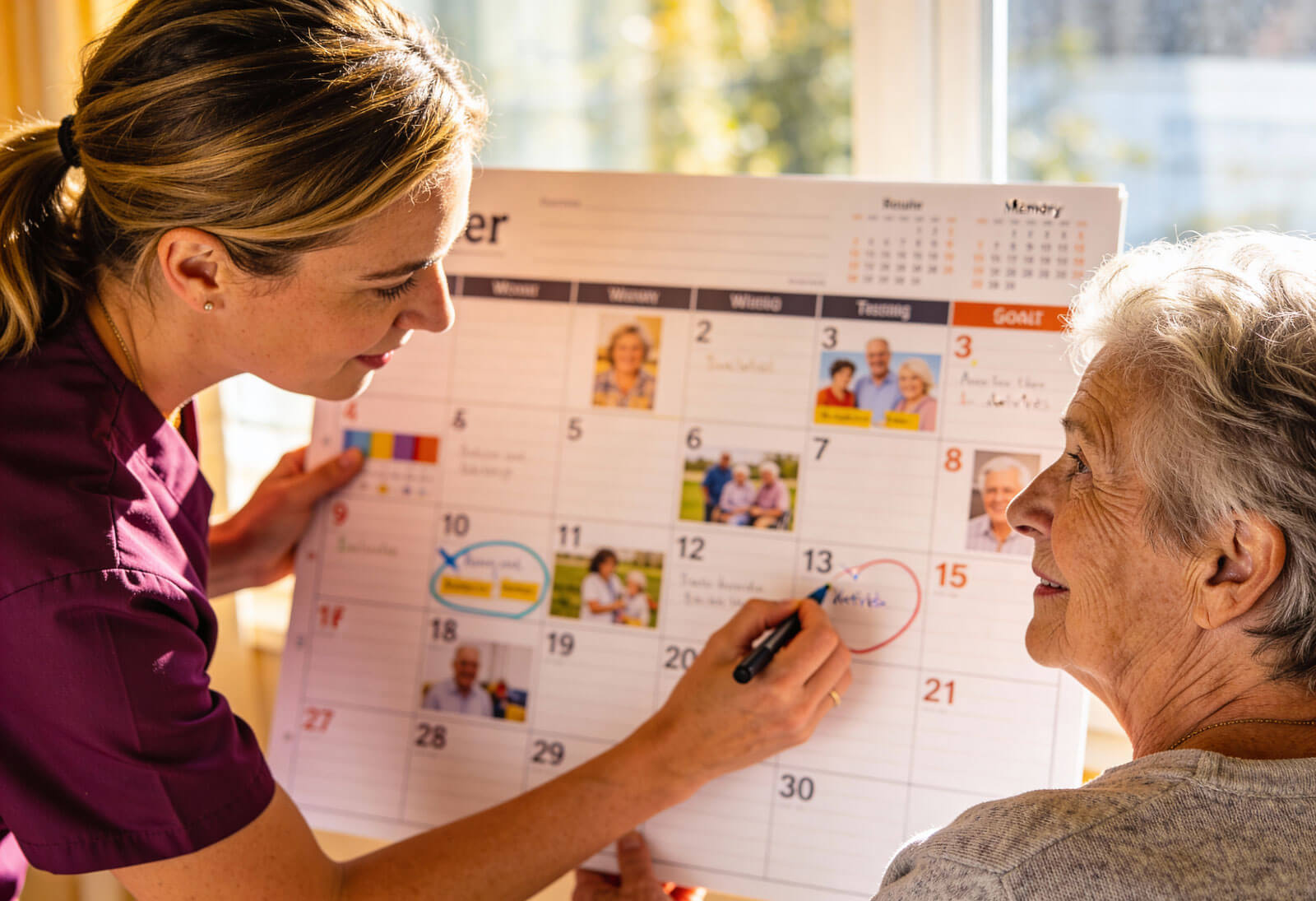
For example, if the goal is to “increase participation in music activities,” the action plan might specify: “Lead participates in music therapy sessions every Tuesday and Thursday (10:00 AM). Caregiver notes resident’s mood and engagement level each session. Family receives a brief update each week. Goal will be reassessed in three months.”
Step 6: Schedule Check-In Points
Plan quarterly or biannual touchpoints to review goals, celebrate progress, and adjust as needed. Memory care is dynamic—goals may need to shift as your loved one’s needs change. That’s normal and expected.
Celebrating Progress and Staying Flexible
One of the most important things to understand about wellness goals in memory care is that success looks different than it might in other health contexts. You may not see dramatic changes or “recovery.” Instead, success might look like:
- Your loved one seeming calmer and more content during visits
- Increased participation in activities they enjoy
- Better sleep and appetite
- Fewer episodes of anxiety or agitation
- A warm smile when you arrive for a visit
- Moments of connection and joy, even amidst memory loss
These quieter victories are profound. They represent quality of life, dignity, and compassionate care in action.
It’s also important to remain flexible. As dementia progresses, goals may need to shift. A resident who was walking independently might benefit from chair-based activities instead. Someone who loved group activities might need more one-on-one engagement. Our team continuously reassesses and adapts—and we encourage families to communicate changes they observe during visits.
Why CareMoore Homes Prioritizes Individualized Wellness Goals
At CareMoore Homes, we’re locally owned and deeply committed to personalized, compassionate care. We don’t use a one-size-fits-all approach. Instead, our nurses, caregivers, and activity directors work collaboratively with families to understand each resident’s unique needs, preferences, and goals.
Every care plan is a living document—reviewed regularly, adjusted thoughtfully, and executed with genuine care. Our team genuinely knows the residents we care for: their stories, their preferences, what brings them comfort, and what matters most to their families.
This personalized approach to goal-setting and wellness creates better outcomes and deeper peace of mind for families.

Moving Into 2026 With Confidence
As you reflect on your loved one’s care this January, consider this a meaningful opportunity. By setting thoughtful wellness goals, establishing clear communication with the care team, and maintaining regular check-ins, you create a foundation for your loved one to thrive in memory care.
The new year isn’t about radical change or aggressive targets. It’s about commitment—your commitment to your loved one’s wellbeing, our commitment to delivering compassionate, personalized care, and the partnership between family and caregivers that makes quality life possible.
At CareMoore Homes, we’re ready to support this journey with you. Our team brings clinical expertise, genuine compassion, and a deep understanding of what it means to live well with memory loss.
Take the Next Step
If you’d like to discuss wellness goals for your loved one already in our care, please contact us to schedule a care planning meeting. If you’re exploring memory care options for a family member and would like to learn more about our approach to personalized, goal-centered care, we invite you to schedule a tour.
📞 Call us at 208-520-1111
🌐 Visit us at caremoorehomes.com
We’re here to answer your questions, address your concerns, and help you navigate this important transition with clarity and compassion. Your loved one deserves care that honors their dignity and supports their wellbeing—and that’s exactly what we’re committed to providing.