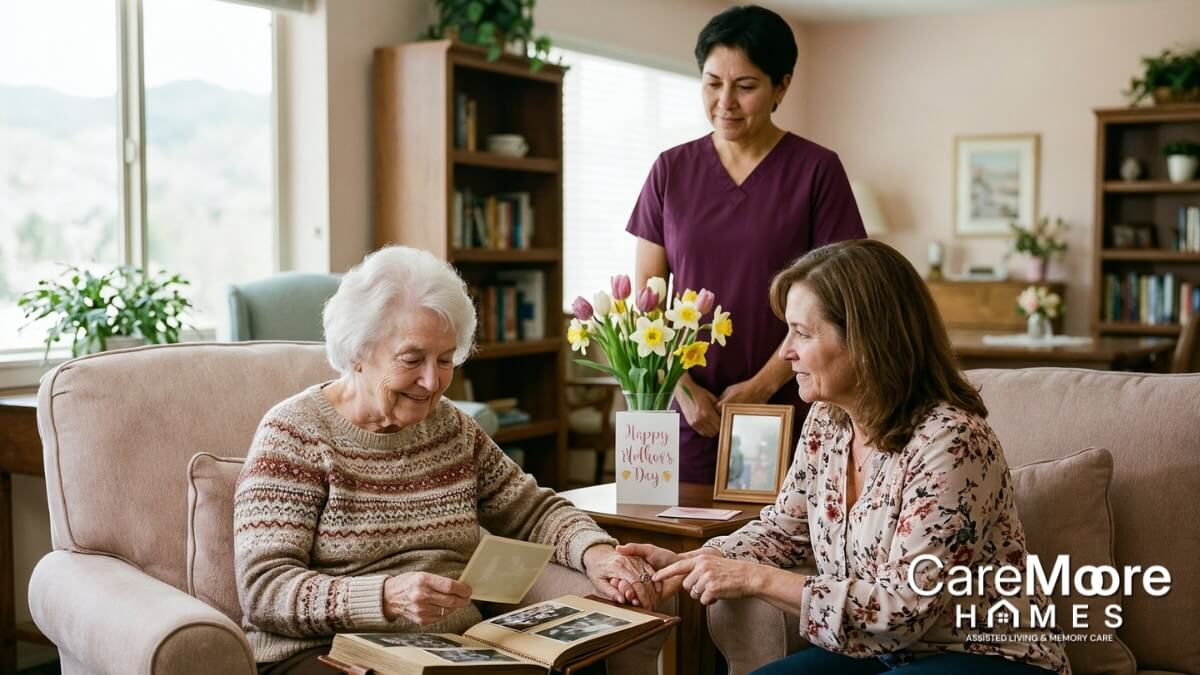

The first few visits after a loved one moves into memory care can feel strange. You walk in carrying a bag of favorite snacks and a head full of questions. What do we talk about? Will Mom know me today? What if Dad asks to go home?
Many families in Boise, Meridian, and across the Treasure Valley tell us the same thing: they worried the move would put distance between them and the person they love. What they often find instead is that, once the daily work of caregiving is shared, there is more room for simply being together.
This guide from CareMoore Homes offers practical ways to make every visit count, whether your loved one is newly settled or living with late-stage dementia.
Your Role Is Changing, Not Ending
When you were the primary caregiver, much of your time went to tasks: medications, meals, bathing, safety. In a memory care home, trained caregivers handle that work around the clock. That frees you to return to your first role: daughter, son, spouse, friend.
According to the National Institute on Aging, visitors are important to people with Alzheimer’s. The person may not always remember who the visitor is, but they often enjoy the company. That is worth holding onto. The value of a visit is not measured by whether your loved one remembers it later. It is measured by how they feel while you are there.

Before You Visit
A little planning makes visits easier on everyone:
- Ask about the best time of day. Many people with dementia are most alert late morning or early afternoon. Our caregivers can tell you when your loved one tends to be at their best.
- Keep it short and sweet. Thirty to sixty minutes is often better than an afternoon. You can always come back.
- Check the day’s rhythm. Try not to arrive right before a meal or rest time, unless you want to join a meal.
- Bring one or two things to share. A photo album, a favorite treat, a familiar song, a soft blanket, or a hand lotion with a favorite scent.
- Come in calm. Take a breath in the car. Your mood tends to set the tone for the visit.
Connecting When Words Are Harder
As dementia progresses, conversation changes. The Alzheimer’s Association notes that in the late stage, a person may rely on nonverbal communication, such as facial expressions or vocal sounds. Its tips for connecting include:
- Approach from the front and identify yourself.
- Use touch, sights, sounds, smells, and tastes to communicate.
- Look for the feelings behind words or sounds.
- Treat the person with dignity and respect, and never talk as if they are not there.
And one of the most reassuring lines families can read: it is okay if you do not know what to say. Your presence and friendship are what matter most.
A few more tips from the National Institute on Aging:
- Make eye contact and call your loved one by name.
- Speak in a normal, warm tone. Avoid “baby talk.”
- Ask simple yes or no questions, or offer two choices.
- Avoid “Don’t you remember?” and try not to correct or argue.
- If they seem confused, respond to the feeling and gently change the subject.
Start each visit with a simple introduction: “Hi Dad, it’s Sarah, your daughter. I came to see you today.” It removes the pressure to remember and lets the visit begin warmly.
10 Simple Things to Do Together
You do not need a plan for every minute. But having a few ideas helps. The Alzheimer’s Association suggests that in the late stage, people experience the world mostly through the senses, so try:
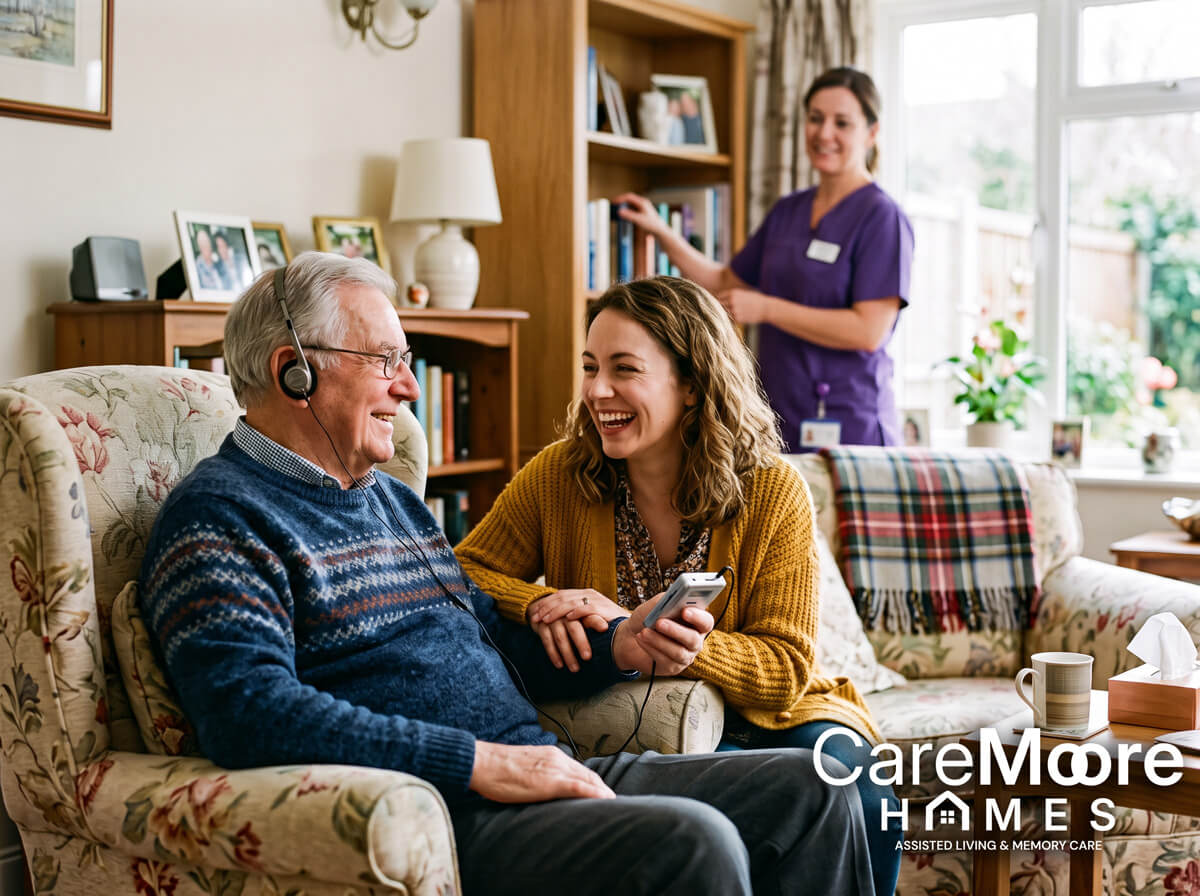
- Play their favorite music. Songs from their teens and twenties often land best. Hum or sing along.
- Look at old photos. Narrate them rather than quizzing: “This is you at the lake in 1972. You loved that boat.”
- Read aloud. A favorite poem, a passage from a meaningful book, or scripture if faith is important to them.
- Give a gentle hand massage with a favorite scented lotion.
- Brush their hair. Slow, familiar care can be deeply soothing.
- Share a favorite treat, if it is safe for them. Ask our caregivers about any diet or swallowing needs first.
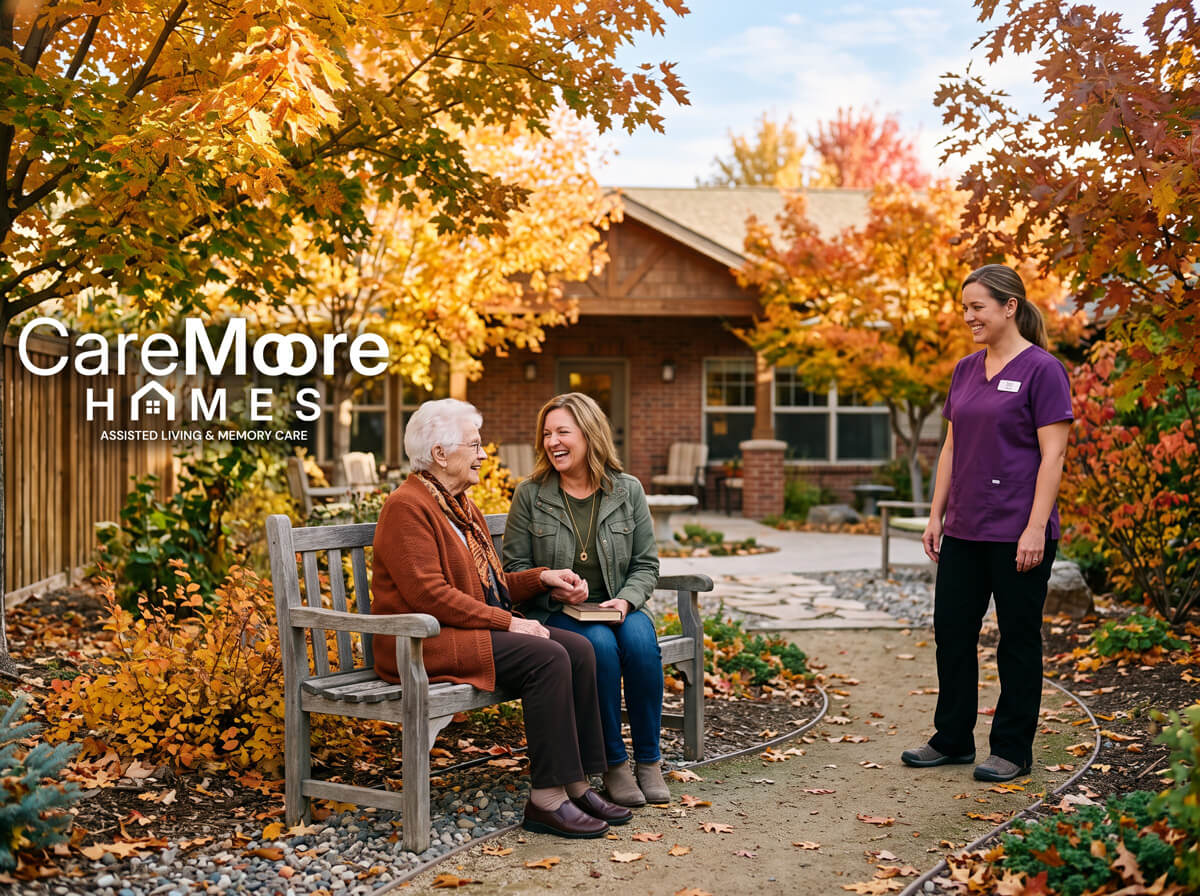
- Sit outside together on a nice fall day, wrapped in a blanket.
- Fold towels or sort something simple. Familiar, purposeful tasks can feel good.
- Watch a favorite old show or a nature video together.
- Simply sit. Holding hands in comfortable quiet is a visit too.
The NIA also notes that building in quiet times by just sitting together can be rewarding. If your loved one dozes off, that is okay. Stay a while. Your presence is still felt.
Bringing Children and Grandchildren
Kids can bring a wonderful spark to a visit. To help it go well:
- Explain beforehand, in simple terms, that Grandma’s brain is sick and she may not remember names, but she still loves them.
- Keep the visit short.
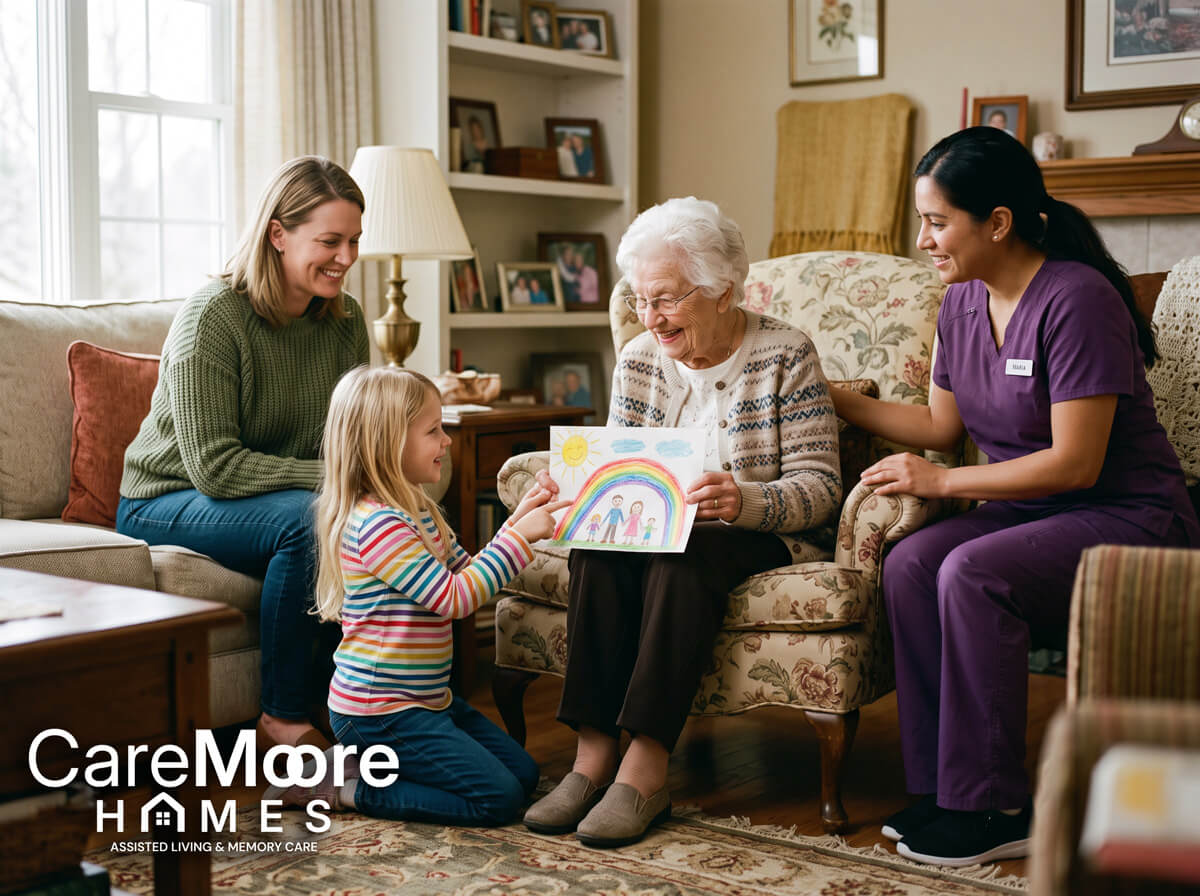
- Give them something to do: show a drawing, read a picture book aloud, sing a song, or play a simple game.
- Let them step outside if they need a break.
- Talk afterward about what they noticed and how they felt.
When a Visit Feels Hard
Some visits will not go the way you hoped. Your loved one may be tired, restless, or upset. They may not recognize you. They may ask for someone who has passed away, or ask to “go home.”
These moments are painful, and they are also normal. A few things that help:
- Do not take it personally. It is the disease, not the relationship.
- Respond to the feeling. “You miss your mom. Tell me about her.” often goes further than a correction.
- Redirect gently. A snack, a song, or a short walk can shift the moment.
- Know when to end early. A calm ten-minute visit is better than a stressful hour.
- Talk to our team. Our caregivers see your loved one every day and can share what is working.
Saying Goodbye Without the Tears
Leaving can be the hardest part. Instead of a long goodbye, try timing your departure with a meal, an activity, or a caregiver’s arrival, so there is a natural next thing to move toward. Keep it simple: “I’m going to head out now. I’ll see you soon.” Then go, with a smile.
Fall Visits and Flu Season
Fall is a lovely time to visit, and also the start of cold and flu season. To help protect every resident:
- Please visit only when you feel well.
- Wash or sanitize your hands when you arrive.
- Let us know if you or anyone in your family has been sick recently.
- Talk with your healthcare provider about the flu vaccine. The CDC recommends a yearly flu vaccine for most people 6 months and older.
If you cannot visit in person, a phone call, a video chat with a caregiver’s help, or a card with a photo can still brighten your loved one’s day.
Frequently Asked Questions
How often should I visit? There is no right number. Consistent, shorter visits often work better than long, occasional ones. Find a rhythm that fits your life.
What if my loved one doesn’t recognize me? Introduce yourself warmly and enjoy the visit anyway. Recognition may come and go, but the comfort of a kind presence often remains.
Can I join a meal or activity? In most cases, yes. Families are welcome to be part of daily life. [PC: confirm meal and activity guest policy with client.]
Should I bring things from home? Yes. Familiar photos, a favorite blanket, or music can help your loved one feel at home. Check with our team about anything fragile or valuable.
Visiting at CareMoore Homes
At CareMoore Homes, our residents live in real homes with small groups and caregivers who know each person well. That makes visits feel less like a trip to a facility and more like dropping by a family home. Our caregivers are always happy to share how your loved one has been doing, what they have enjoyed lately, and what might make your next visit even better.
If you are exploring memory care for someone you love, we would be honored to show you around. Call (208) 520-1111 or visit https://caremoorehomes.com/ to schedule a complimentary consultation and tour.
Still Connected
Dementia changes many things. It does not change the value of showing up. A song, a hand held, a familiar voice: these are the moments that still matter, and they are yours to share.
References
1. National Institute on Aging: Adapting Activities for People With Alzheimer’s Disease: Visitors and adapting activities.
2. National Institute on Aging: Activities To Do With a Family Member or Friend Who Has Alzheimer’s Disease: Activity ideas and quiet time together.
3. National Institute on Aging: Communicating With Someone Who Has Alzheimer’s Disease: Communication tips.
4. Alzheimer’s Association: Communication and Alzheimer’s: Late-stage communication.
5. Alzheimer’s Association: Late-Stage Caregiving: Connecting through the senses.
6. CDC: Influenza (Flu): Flu vaccination.
This content was produced by a human author with the assistance of AI. Similar to humans, AI can make mistakes too. We have done our best to reasonably cite sources to substantiate any facts or claims made in this content.