
For many families in the Treasure Valley, caring for a loved one with dementia at home begins as an act of love that feels natural. You adjust routines, add a few safety measures, and find ways to keep life familiar. For a long time, it works.
Then something shifts. Nights become harder. Mobility declines. A fall happens, or nearly happens. Eating and drinking take more help. The question slowly changes from “How do we manage?” to “Is this still safe?”
If your family is asking that question, you are not alone, and you are not failing. Late-stage dementia brings needs that often exceed what one or two family members can safely provide at home. This guide from CareMoore Homes explains what changes in late-stage dementia, why a small memory care home can be the right next step, and how to make the decision with confidence.
What Changes in Late-Stage Dementia
According to the Alzheimer’s Association, in the late stage of Alzheimer’s disease, individuals lose the ability to respond to their environment, to carry on a conversation, and eventually to control movement. They often need around-the-clock assistance with daily personal care.
The National Institute on Aging notes that people in the last stages may have trouble swallowing, may become more vulnerable to infections, and often need help with nearly all daily activities. Comfort, skin care, nutrition, and gentle mobility become central to their care.
Every person’s path is different, but common changes include:
- Needing full assistance with bathing, dressing, eating, and toileting
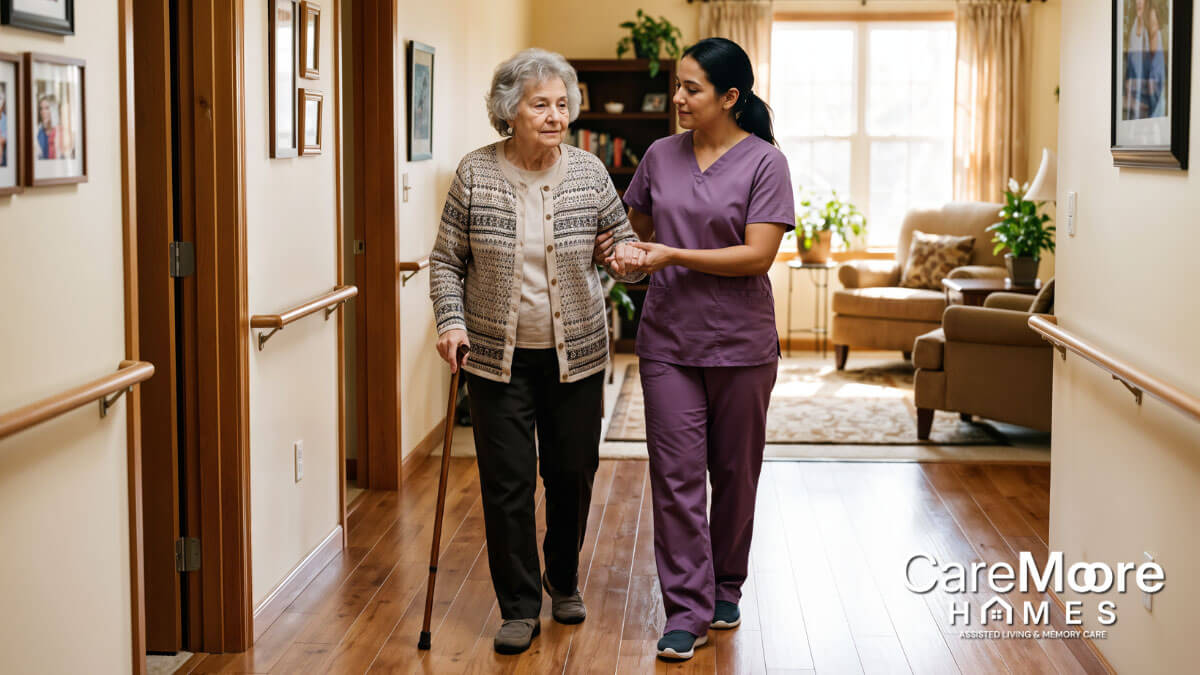
- Reduced mobility, increased fall risk, or spending more time in bed or a chair
- Difficulty swallowing and a need for careful meal preparation
- Limited verbal communication
- Changes in sleep patterns and increased need for overnight supervision
The Safety Questions Families Start Asking
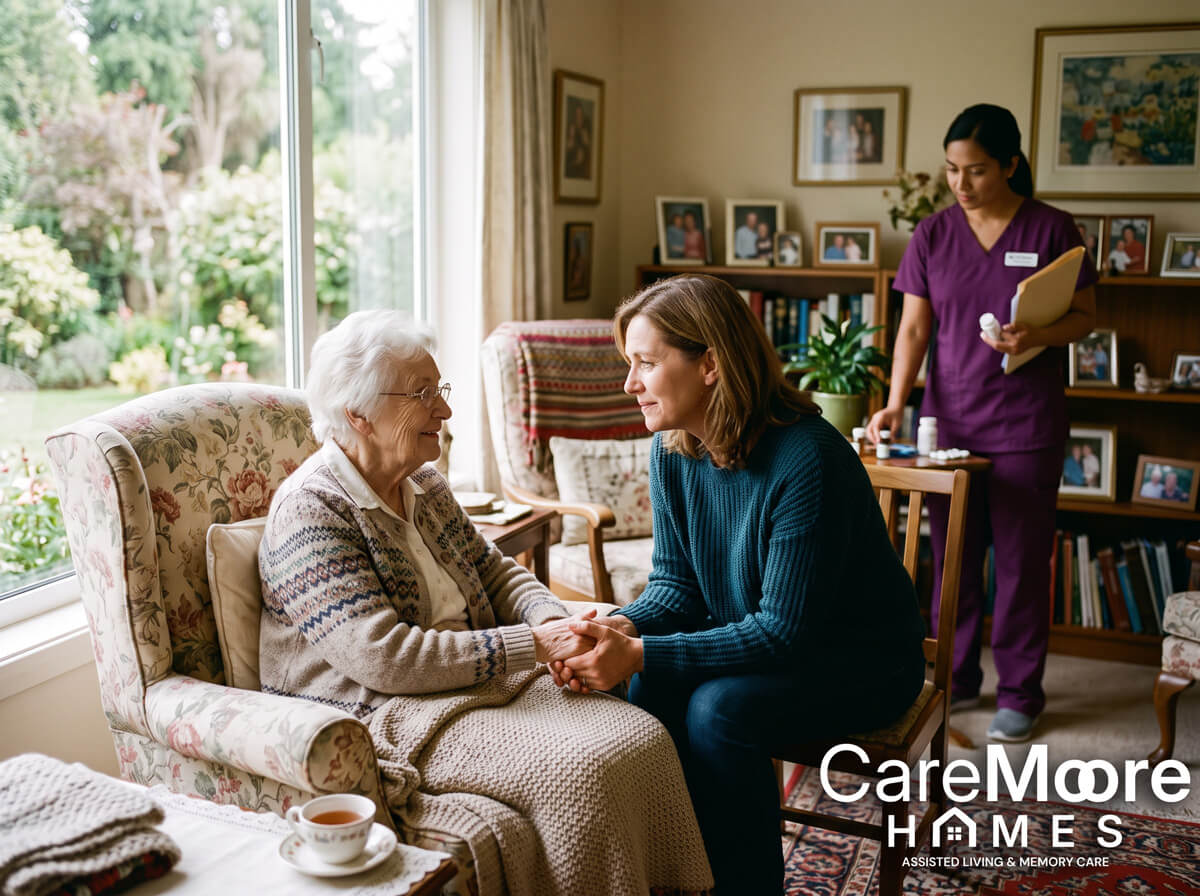
Families often reach a turning point when questions like these keep coming up:
- Can we safely help with transfers from bed to chair without risking injury to ourselves or our loved one?
- Is someone awake and available at night?
- Are we able to keep up with meals, hydration, and repositioning?
- Is the primary caregiver’s health suffering?
- Would a calmer, more structured environment help our loved one feel more at ease?
If the honest answer to several of these is “not really,” it may be time to explore memory care.
Why a Small Memory Care Home Is Different
When people hear “memory care,” they often picture a large facility with long hallways. CareMoore Homes offers something different: small, residential homes designed to feel like home.
- A true home setting. Residents live in a house with a kitchen, living room, and familiar comforts.
- Fewer residents, more attention. A smaller group means caregivers get to know each resident’s preferences, cues, and history.
- Round-the-clock care. Trained caregivers are present day and night.
- Calm, predictable routines. Consistency helps reduce confusion and distress.
- Family is part of the circle. Visits, updates, and involvement are welcomed.
What Daily Life Looks Like at CareMoore Homes
Days at CareMoore Homes are built around comfort, connection, and dignity:
- Help with personal care, delivered gently and respectfully
- Home-cooked meals prepared to meet each resident’s needs
- Hydration and repositioning routines to support comfort
- Sensory activities like music, soft textures, and time outdoors
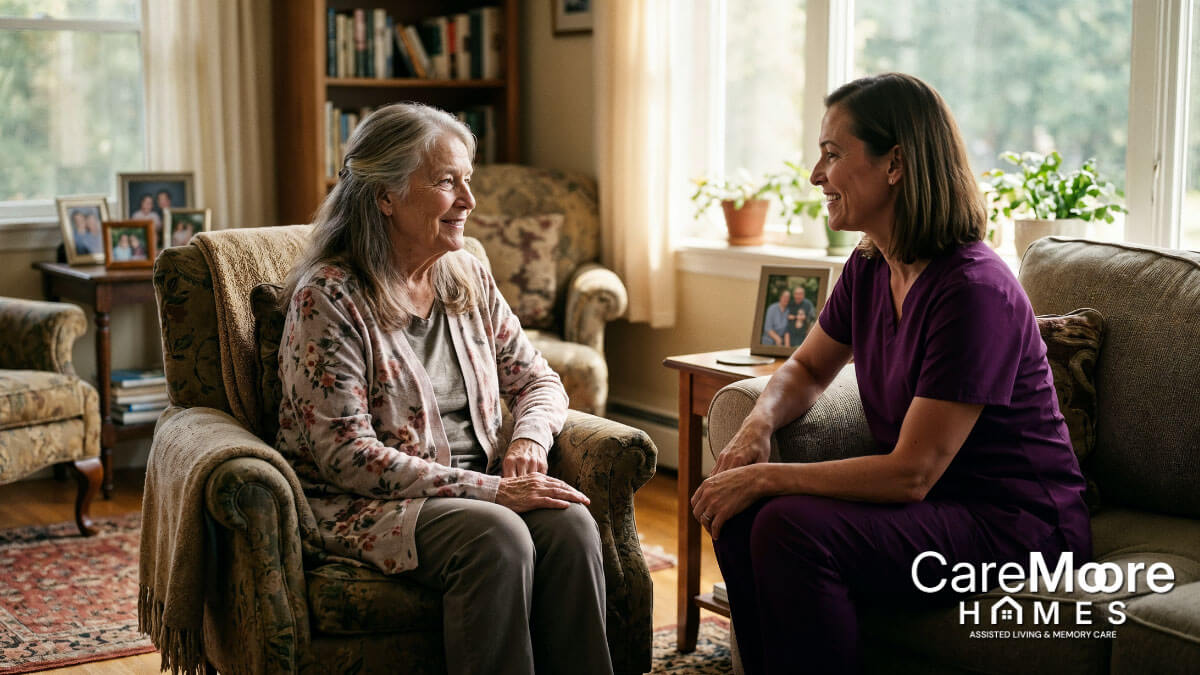
- Quiet moments of companionship, hand-holding, and conversation
- Communication with families about how their loved one is doing
As flu season arrives, homes also follow wellness and infection-prevention practices to help protect residents. The CDC recommends annual flu vaccination for most people, and families are encouraged to stay home when sick and visit when well.

Making the Decision Without Guilt
Many family caregivers feel guilty even considering a move. It helps to remember:
- Choosing memory care is a way of getting your loved one more support, not less love.
- Your role changes from full-time caregiver back to spouse, son, or daughter.
- Rested families bring more patience, presence, and joy to visits.
The Alzheimer’s Association offers support for families facing this decision, including a free 24/7 Helpline at 800.272.3900.
Questions to Ask When Touring a Memory Care Home
Touring can feel overwhelming. Bringing a short list of questions helps you compare options and trust your instincts:
- How many residents live in the home, and how many caregivers are on duty during the day and overnight?
- How are caregivers trained in dementia and late-stage care?
- How do you support residents who need full assistance with eating, bathing, and mobility?
- What does a typical day look like for residents at my loved one’s stage?
- How do you communicate with families, and how often?
- How do you coordinate with physicians, hospice teams, or other outside providers?
- What are visiting hours, and are families encouraged to join meals or activities?
- How do you personalize care to a resident’s history and preferences?
Pay attention to the feeling of the home as well. Is it calm? Are residents engaged and comfortable? Do caregivers speak to residents with warmth and patience? Those impressions matter as much as the answers.
Helping Your Loved One Settle In
The first weeks after a move are an adjustment for everyone. A few steps can make the transition smoother:
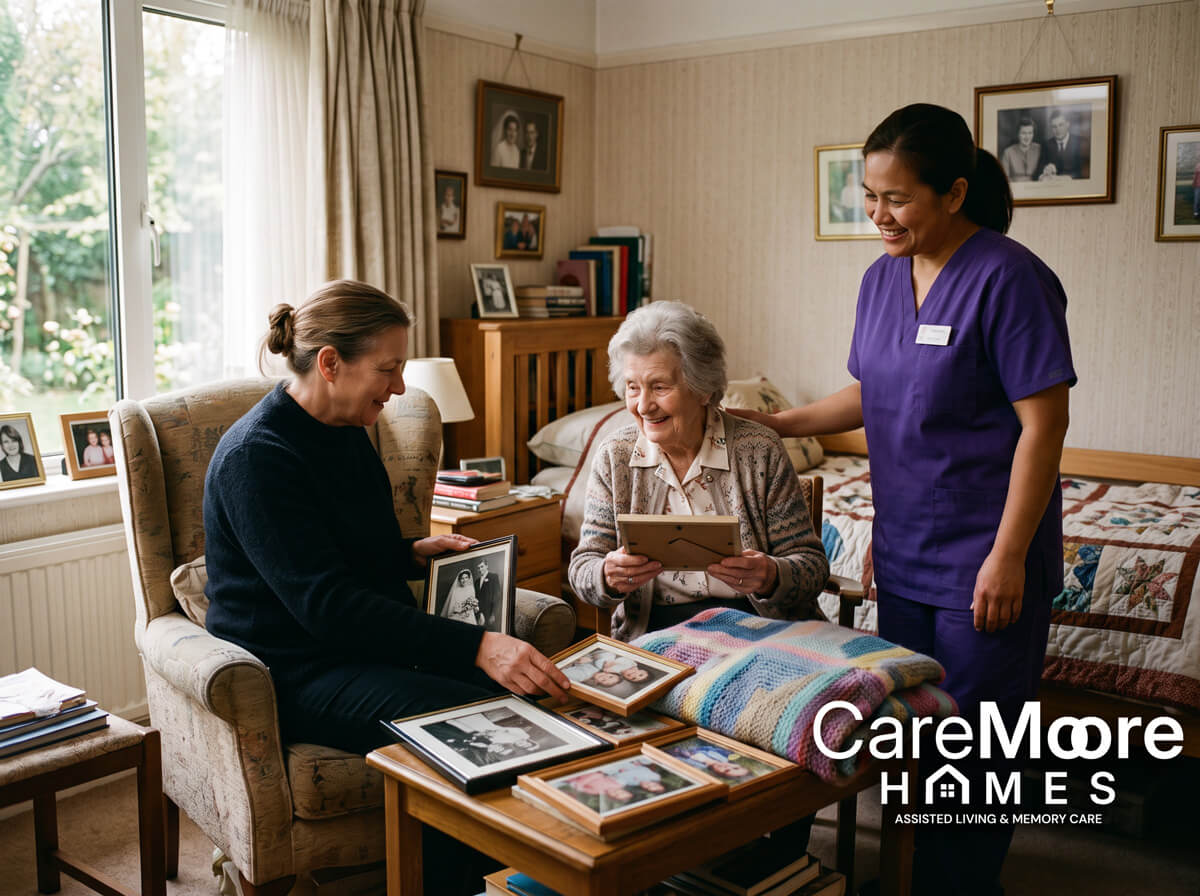
- Bring familiar items. A favorite blanket, family photos, a well-loved chair, or a music playlist can make a new room feel like home.
- Share their story. Tell caregivers about your loved one’s career, hobbies, routines, and what comforts them. The more we know, the better we can care.
- Plan visits thoughtfully. Short, calm visits at your loved one’s best time of day often work well at first.
- Expect ups and downs. Some days will feel easier than others. That is normal.
- Take care of yourself. After months or years of caregiving, allow yourself time to rest and simply be family again.
At CareMoore Homes, our team partners with families through every step of the transition, keeping you informed and involved.
Frequently Asked Questions
How do we know it is the right time? If safety concerns, round-the-clock care needs, or caregiver health are becoming constant worries, it is worth exploring memory care. A consultation can help you think it through without pressure.
Can we still be involved in our loved one’s care? Absolutely. Families are part of the care circle, and we welcome visits, input, and ongoing conversation.
What makes a small home different from a large facility? Fewer residents, a true home environment, and caregivers who get to know each person closely.
Do you offer tours? Yes. We encourage families to visit, meet our team, and see daily life in our homes.
Taking the Next Step
The best time to explore memory care is before a crisis forces a rushed decision. A tour and conversation can help you understand options and feel prepared.
CareMoore Homes offers a complimentary consultation for families considering memory care. Call (208) 520-1111 or visit https://caremoorehomes.com/ to schedule a visit. We would be honored to get to know your family.
References
- Alzheimer’s Association: Late-Stage Caregiving: Care needs in late-stage Alzheimer’s.
- National Institute on Aging: Care in the Last Stages of Alzheimer’s: Physical changes and comfort care.
- CDC: Influenza (Flu): Flu vaccination and prevention.
- Alzheimer’s Association: Caregiving: Family caregiver support and 24/7 Helpline.
This content was produced by a human author with the assistance of AI. Similar to humans, AI can make mistakes too. We have done our best to reasonably cite sources to substantiate any facts or claims made in this content.