A veteran’s life contains far more than a diagnosis. It includes relationships, work, favorite music, familiar routines, personal values, and experiences that may span many decades.
Military service may be one important part of that story. It may also be something the person prefers not to discuss. When a veteran develops Alzheimer’s disease or another dementia, respectful care leaves room for both possibilities.
Veterans Day offers an opportunity to express gratitude. For families exploring veterans memory care in Meridian or the Boise area, it is also a useful reminder to ask how a home gets to know each resident as an individual.
A small residential setting can offer a home-style environment, but its size alone does not establish that it is the right fit. Families still need clear answers about staff capabilities, daily routines, communication, safety, and changing needs.
The most meaningful question is not simply, “Do you recognize Veterans Day?” It is, “How will you learn what matters to this person throughout the year?”
Begin With the Person’s Story, Not a Stereotype
Veterans do not all have the same preferences, experiences, or relationship with military service.
One person may enjoy looking at photographs or discussing a former role. Another may prefer gardening, music, family stories, or an ordinary conversation about the day.
Ask the veteran what they would like to share whenever possible. Family members can contribute helpful information without assuming every service-related object or activity will be comforting.
A brief life-history summary might include:
- The name and form of address the person prefers
- Important people and relationships
- Favorite music, foods, hobbies, and activities
- Usual morning and evening routines
- Work, service, or community roles they valued
- Subjects they enjoy discussing
- Topics or situations that may be upsetting
- Communication approaches that have been helpful
Share only what is relevant to care and protect sensitive information. A resident does not need to disclose personal or traumatic experiences to be treated with dignity.
Use Familiar Items to Invite Connection, Not Test Memory
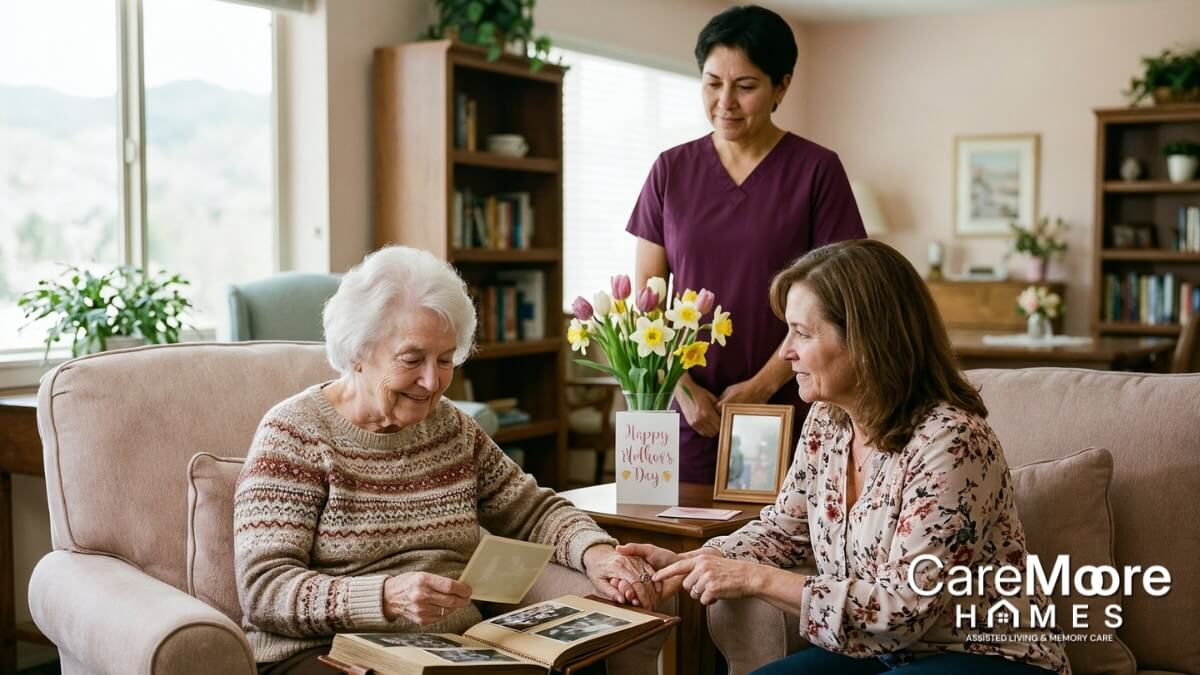
A photograph, song, or keepsake can provide a starting point for time together.
The purpose is not to demand an accurate account of the past. Questions such as “Who is that?” or “Don’t you remember?” may turn an ordinary moment into a test.
Instead, describe what you see:
“This photograph looks like a sunny day.”
“I like this song. Shall we listen together?”
The VA’s dementia caregiving guidance encourages reassurance, remaining calm, and sharing a memory rather than insisting that the person remember.
Follow the resident’s response. If an item seems unwelcome, put it aside. Something that was enjoyable on one day may not be appealing on another.
Before bringing military photographs, medals, letters, or other valuables into a home, ask about storage and display. Copies may be more practical than irreplaceable originals.
Look Beyond the Home-Like Appearance
A welcoming living room matters, but décor does not explain how care is delivered.
During a tour, notice how staff speak with residents. Are people addressed directly? Are choices offered respectfully? Is there time for a response?
Ask how information about a resident is shared across the team. A life-history form is useful only if the relevant details inform everyday interactions.
Questions include:
- How do you learn a new resident’s routines and preferences?
- How are those details communicated between shifts?
- How do you introduce activities without pressuring participation?
- What happens when someone declines assistance?
- How do staff respond to distress or a change in behavior?
- Who communicates with the family?
Small homes can still vary considerably in layout, staffing, capabilities, and daily practice. Compare processes rather than assuming size guarantees a particular experience.
Honor Service Through Everyday Choices
A Veterans Day ceremony may be meaningful. So may a quiet thank-you, a familiar meal, or no special activity at all.
Respectful recognition should be guided by the person, not by a calendar or an audience.
Possible activities, when appropriate to the individual, include:
- Listening to preferred music
- Looking at a small selection of photographs
- Spending time with a familiar visitor
- Watching part of an event if the resident enjoys it
- Participating in a familiar household activity
- Sitting together without expecting conversation
The Alzheimer’s Association recommends adapting activities to the person’s abilities, interests, and mood. Participation matters more than finishing a task or doing it correctly.
Military history should not determine every activity. A person who served may be more interested today in a favorite team, a garden, or a family pet.
Communication Should Preserve Adult Dignity
Dementia can affect how a person understands language, follows conversation, or expresses a need. That does not remove their right to be treated as an adult.
Use a calm tone. Keep questions manageable. Offer time to respond rather than filling every pause.
When appropriate, offer a simple choice: “Would you like to sit here or by the window?” Too many choices at once can make an interaction harder to follow.
Acknowledge the emotion behind a concern without arguing over every detail. If the person seems worried, ask the care team what reassurance is appropriate.
Avoid assuming every difficult moment is related to military experiences or dementia. Pain, illness, medication effects, and other needs may require professional attention. Sudden or significant changes should be reported through the home’s clinical communication process.
Make Family Partnership Practical
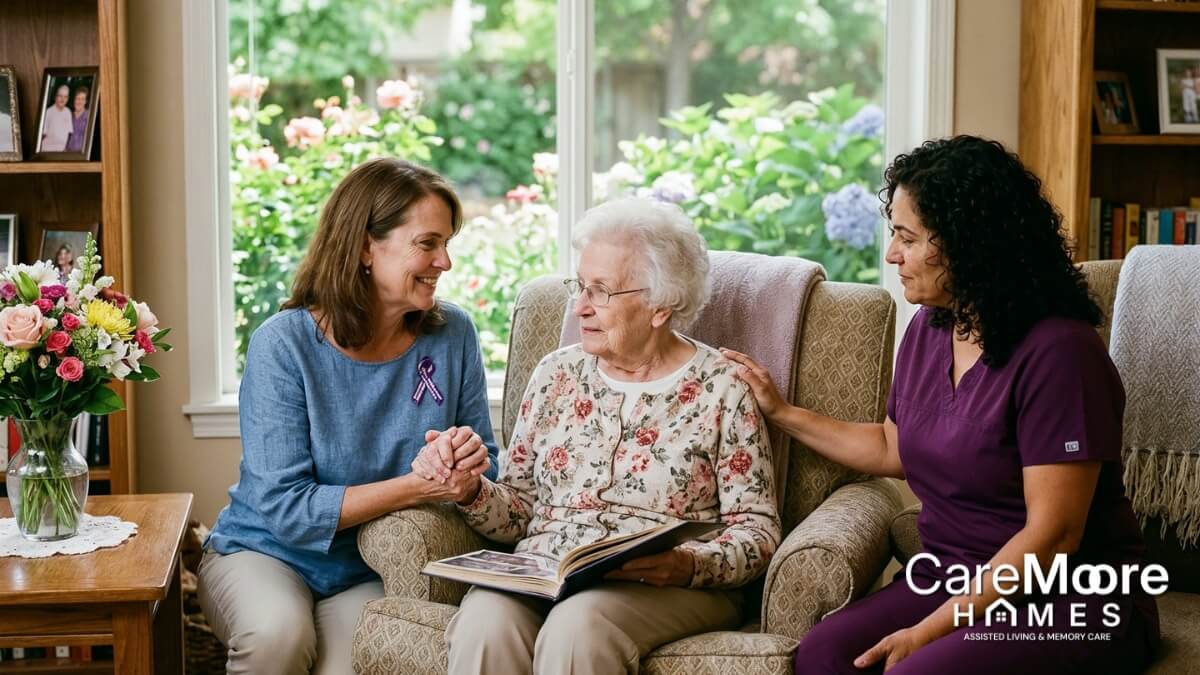
A move to residential memory care changes the family’s role, but it does not make their knowledge unimportant.
Families may know which greeting feels comfortable, what music is preferred, and which routine has been meaningful for years. Staff may notice patterns that relatives do not see during a brief visit.
Ask how those perspectives come together.
A practical family partnership should clarify:
- The main point of contact
- How routine updates are shared
- How urgent concerns are communicated
- Who may receive private information
- How preferences are updated
- How visits are coordinated
- How outside health care professionals are involved
- How changing needs are reviewed
Be clear about what the home can support and when another level of care may be required. An honest discussion of limits is more useful than a promise that every future need can be handled.
Keep VA Program Questions Separate From Choosing a Home
Veterans and caregivers may also be exploring public support.
The VA’s Program of General Caregiver Support Services describes resources such as skills training, coaching, peer support, and referrals for qualifying caregivers.
The Program of Comprehensive Assistance for Family Caregivers is separate and has its own requirements.
These resources do not establish payment for a residential home. Program access, eligibility, and any benefit arrangement must be confirmed with the appropriate VA team.
This article does not claim that CareMoore Homes has a VA contract, accepts a particular VA benefit, or determines eligibility.
Bring Questions That Reflect the Veteran’s Actual Needs
Before touring, write a brief description of what your family is looking for.
Include the person’s preferences, the assistance currently needed, and the questions that require clarification. Ask how to share health information securely rather than including private details in a public message.
On the tour, discuss:
- The home’s current care capabilities
- Staff training and supervision
- Personal care and medication-support processes
- Daily activities and individual choice
- Meals and accommodation of assessed needs
- Family communication
- Emergency procedures
- Costs, agreements, and current availability
Ask about the specific home under consideration. Services and suitability should not be inferred from a general description of the organization.
Frequently Asked Questions
Does a Veteran Need a Military-Specific Memory Care Home?
Not necessarily. Fit depends on individual needs, preferences, clinical guidance, and the home’s capabilities. Ask how service history is respected without making assumptions.
Can Families Bring Military Keepsakes?
Ask about display, storage, and safety first. Copies or a small selection may be preferable to valuable originals.
What if the Person Does Not Remember Their Service?
Offer connection without testing memory. Follow their cues and do not require recognition for a moment to be worthwhile.
Does This Article Establish VA Coverage?
No. Confirm benefit questions with the VA and payment arrangements directly with the home.
Look for a Home That Makes Room for the Whole Person
Honoring a veteran living with dementia is not limited to November 11. It can be reflected in respectful choices, patient communication, and attention to what matters now.
CareMoore Homes describes a person-centered, small-home approach to residential memory care. Families exploring the Settlers home in Meridian can ask how that approach would fit their loved one’s needs.
CareMoore Homes
Settlers location: 3336 Meridian Rd., Meridian, ID 83646
Phone: (208) 520-1111
Website: https://caremoorehomes.com/
Contact the team to ask about the home, current service fit, and arranging a visit.
References
- VA Caregiver Support Program: Caregiving Tips: Dementia. Supports calm communication, reassurance, and avoiding memory tests.
- Alzheimer’s Association: Activities to Enjoy With Someone Who Has Alzheimer’s or Dementia. Supports individualized, adaptable activities.
- VA: Program of General Caregiver Support Services. Describes caregiver resources and access considerations.
- VA: Program of Comprehensive Assistance for Family Caregivers. Explains the separate application-based program.
- CareMoore Homes: Memory Care. Describes the organization’s person-centered residential approach.
This content was created with AI assistance.